


Short answer: Bimetallic strip and clad metal combine two metals so each contributes its best property — corrosion resistance, conductivity or cost on one side, strength or economy on the other — for thermostats, cladding, contacts and reactive-service parts.
At a Glance
How Bimetals Are Made
Explosion, roll-bond or Metal Diffusion Bonding Guide joins the layers into one composite; roll cladding is related to Metal Cladding Facades and heavy plate from Steel Plate Supplier. The bond must survive thermal cycling — tie to Thermal Expansion Of Metals et Metal Thermal Fatigue Guide.
What They Do
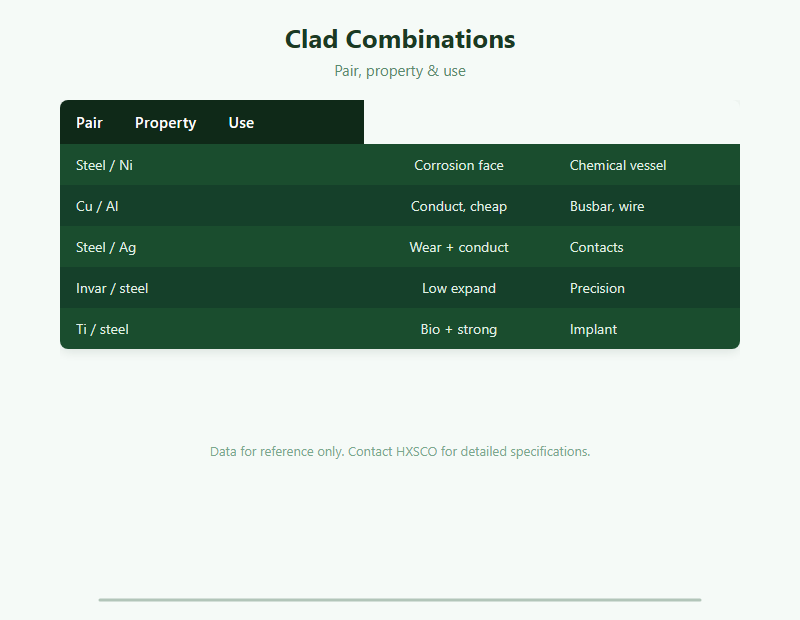
The classic bimetallic strip bends with temperature (thermostats) because the two metals expand differently (Thermal Expansion Of Metals); clad plate puts stainless or nickel against corrosion while steel carries load (Stainless Steel Supplier, Nickel Alloy Supplier); Cu/Al clad cuts cost in Busbar Copper Vs Aluminum.
Design, QA & Supply
Check bond shear, thickness and corrosion face; verify with Metal Ndt Guide et Tensile Test Guide, document per Mill Test Certificate Guide. HXSCO supplies clad and bimetallic stock for your service.
Get a Quote
Tell HXSCO your requirements and we will respond with a competitive quote and lead time.
Questions fréquemment posées
Two metals bonded so they bend when heated because they expand by different amounts — used in thermostats.
By explosion, roll-bonding or diffusion bonding two metals into one composite plate or strip.
Vessels and tanks needing a corrosion-resistant face (stainless/nickel) over a strong, economical steel backing.
Yes — it gives copper conductivity where it matters at a lower aluminium-backed cost.
HXSCO supplies clad and bimetallic strip and plate with documented bond and thickness.
Source Clad & Bimetal from HXSCO
HXSCO supplies clad plate, bimetallic strip and composite stock with documented bond and corrosion face. Send your pair, gauge and quantity for a quote.