


Short answer: Cavitation is the violent collapse of vapour bubbles on a metal surface that blasts away tiny particles, causing sponge-like erosion; it is avoided by good hydraulic design, smoother surfaces and cavitation-resistant alloys or coatings such as 316/duplex stainless and hardfacings.
At a Glance
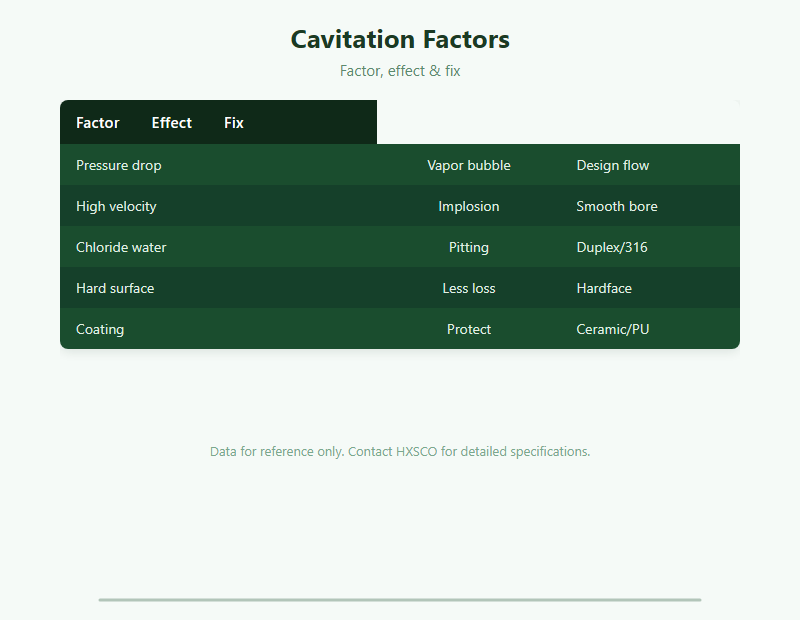
How Cavitation Erodes Metal
Local pressure drops below vapour pressure, bubbles form, then implode against the surface with micro-jets that tear out metal — often capped by Pitting Corrosion Stainless Steel und Crevice Corrosion Stainless Steel in water. It is driven by the same electrochemistry as Galvanic Corrosion Guide and is severe in Seawater Corrosion Guide; baseline care is How To Prevent Metal Rust.
Vulnerable Components
Pump impellers, valve trims, propeller blades and turbine runners suffer most where flow accelerates. Material choice matters: Duplex Stainless Supplier, Edelstahlsorten erklärt und Stainless Steel 316 Properties resist chloride cavitation, while Copper Supplier und Brass Supplier serve specific duties. Context from Metal Powder Metallurgy Guide is not relevant here.
Mitigation
Improve hydraulic design, smooth bores, reduce cavitation number, and use hardfacing or ceramic/PU coatings via Metal Hardfacing Guide. Add Metal Corrosion Inhibitor Guide und Cathodic Protection Guide, and inspect with Metal Ndt Guide; certificate per Mill Test Certificate Guide.
Get a Quote
Tell HXSCO your requirements and we will respond with a competitive quote and lead time.
Häufig gestellte Fragen
Erosion from the collapse of vapour bubbles against a surface, blasting away tiny particles and leaving a rough, sponge-like worn area.
Pump impellers, valve trims, propeller and turbine blades — anywhere flow accelerates and local pressure drops below vapour pressure.
Hard, chloride-resistant alloys such as 316 and duplex stainless, plus hardfaced or ceramic/PU-coated surfaces; softer metals erode faster.
Better hydraulic design, smoother surfaces, lower cavitation number, resistant alloys/coatings and corrosion inhibitors in the fluid.
HXSCO supplies 316/duplex and hardfaced components with certificates for pump and marine cavitation duty.
Source Cavitation-Resistant Parts from HXSCO
HXSCO supplies 316/duplex and hardfaced components with certificates for pump and marine cavitation duty. Send your part, medium and quantity for a quote.