


Short answer: Passivation removes free iron from stainless surfaces with nitric or citric acid per ASTM A967 so the chromium-rich layer reforms and corrosion resistance recovers; citric is now common for lower hazard, while electropolish also smooths the part.
At a Glance
Why Passivate Stainless
Machining and handling leave embedded iron that rusts; passivation restores the passive film on our Stainless Steel Supplier stock, the grade forms in our 304 Plate и 316 Plate pages and the duplex option in our Дуплекс 2205 guide.
Process and Standards
Parts are cleaned, immersed in nitric or citric acid, rinsed and tested; the weld context is in our Stainless Welding Guide, surface prep in our Surface Treatment Guide and certificate in our Mill Test Certificate Guide.
Choosing a Method
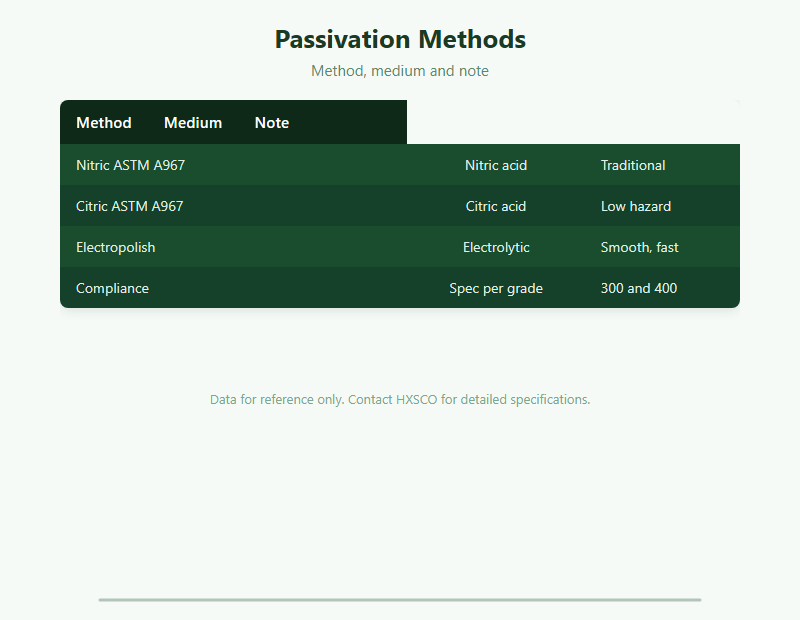
Citric passivation is preferred for safety and waste, electropolish for smooth finishes, and nitric remains for some specs; the finish view is in our Finishing Coating Guide and cost in our Stainless Price Factors page.
QA and Sourcing
Free-iron and corrosion tests confirm the result before shipping; the checks are in our Quality Inspection Guide and packing in our Export Packing Guide.
Get a Quote
Tell HXSCO your requirements and we will respond with a competitive quote and lead time.
Часто задаваемые вопросы
It removes free iron so stainless regains its chromium-rich passive film and resists rust.
Citric is lower hazard and widely accepted; nitric stays for some specifications.
ASTM A967 covers nitric and citric passivation of stainless steels.
No – it is a thin surface film and does not change size.
Electropolish also smooths and brightens; passivation only restores the film.
Order Passivated Stainless from HXSCO
HXSCO supplies ASTM A967 passivated 300 and 400 series stainless plate, bar and parts. Send your grade and spec for a quote.