


Short answer: Anodizing integrates a hard, thin oxide layer best on aluminum with limited color, while powder coating paints a thick, wide-color film on almost any metal; choose by substrate, color need, durability and touch-up.
At a Glance
Two Different Finishes
Anodizing grows an oxide layer into the aluminum, while powder coating lays a cured film on top; the aluminum base is in our Aluminum Supplier and the process in our Anodized Aluminum Guide.
Color and Appearance
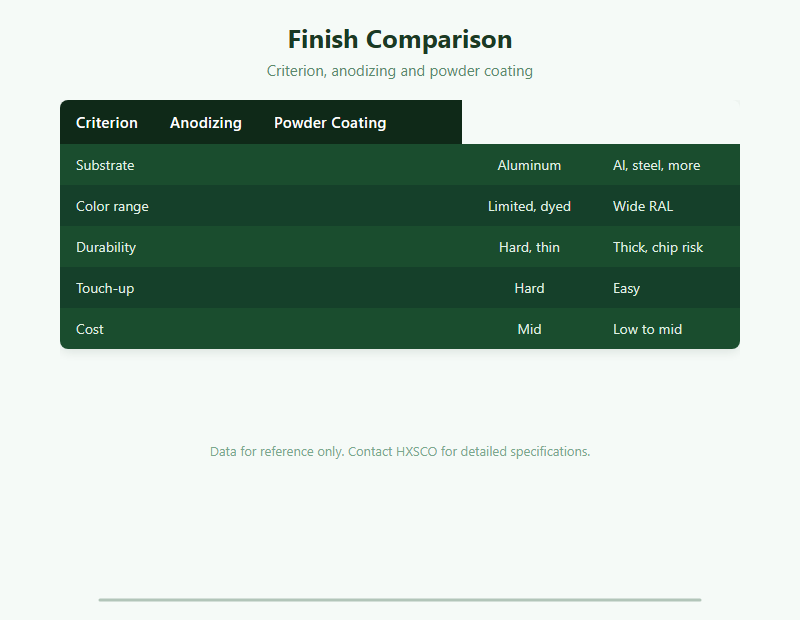
Powder coating wins on color range and gloss, while anodize gives a limited, dyed look; the choice is part of our Finishing Coating Guide and facade ideas in our Cladding and Facades Guide.
Durability and Repair
Anodize is thin but very hard and hard to touch up; powder is thicker but can chip and is easy to repaint, with corrosion care in our Corrosion Protection Guide и Galvanized vs Stainless Guide.
Specifying and Sourcing
Buyers set substrate, color and environment, then confirm with our Surface Treatment Guide and pack per our Export Packing Guide.
Get a Quote
Tell HXSCO your requirements and we will respond with a competitive quote and lead time.
Часто задаваемые вопросы
Anodizing is hard and integral; powder coating is thicker but can chip.
Powder coating offers a wide RAL range; anodize is limited and dyed.
No – anodizing is for aluminum; steel uses powder or other coatings.
Powder coating is easy to strip and repaint; anodize is hard to touch up.
Anodizing is mid cost; powder coating is usually lower to mid.
Finish Metal with HXSCO
HXSCO supplies aluminum and steel with anodized or powder-coated finish for your parts and facades. Send your substrate, color and environment for a quote.