


Short answer: Passivation removes free iron from stainless surfaces with nitric or citric acid per ASTM A967 so the chromium-rich layer reforms and corrosion resistance recovers; citric is now common for lower hazard, while electropolish also smooths the part.
At a Glance
Why Passivate Stainless
Machining and handling leave embedded iron that rusts; passivation restores the passive film on our Stainless Steel Supplier stock, the grade forms in our 304 Plate ve 316 Plate pages and the duplex option in our Dubleks 2205 guide.
Process and Standards
Parts are cleaned, immersed in nitric or citric acid, rinsed and tested; the weld context is in our Stainless Welding Guide, surface prep in our Surface Treatment Guide and certificate in our Mill Test Certificate Guide.
Choosing a Method
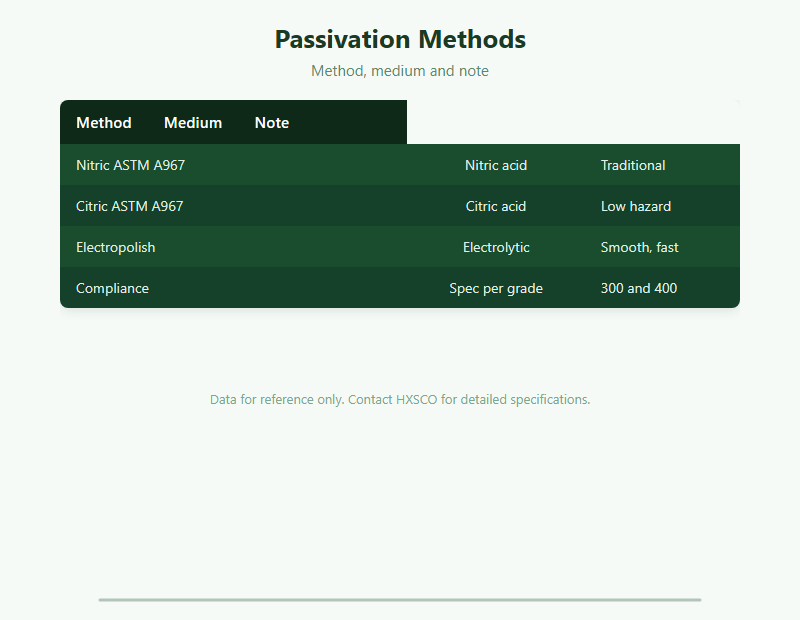
Citric passivation is preferred for safety and waste, electropolish for smooth finishes, and nitric remains for some specs; the finish view is in our Finishing Coating Guide and cost in our Stainless Price Factors page.
QA and Sourcing
Free-iron and corrosion tests confirm the result before shipping; the checks are in our Quality Inspection Guide and packing in our Export Packing Guide.
Get a Quote
Tell HXSCO your requirements and we will respond with a competitive quote and lead time.
Sıkça Sorulan Sorular
It removes free iron so stainless regains its chromium-rich passive film and resists rust.
Citric is lower hazard and widely accepted; nitric stays for some specifications.
ASTM A967 covers nitric and citric passivation of stainless steels.
No – it is a thin surface film and does not change size.
Electropolish also smooths and brightens; passivation only restores the film.
Order Passivated Stainless from HXSCO
HXSCO supplies ASTM A967 passivated 300 and 400 series stainless plate, bar and parts. Send your grade and spec for a quote.