



Short answer: Metal weld defects such as porosity from gas or damp filler, cracking from stress and hydrogen, lack of fusion from wrong heat input, slag from poor cleaning and undercut from excessive heat all reduce strength and code compliance, so they are prevented by dry clean consumables, correct parameters, preheat where needed and verified inspection, and detected by visual, dye and ultrasonic methods before parts ship.
At a Glance
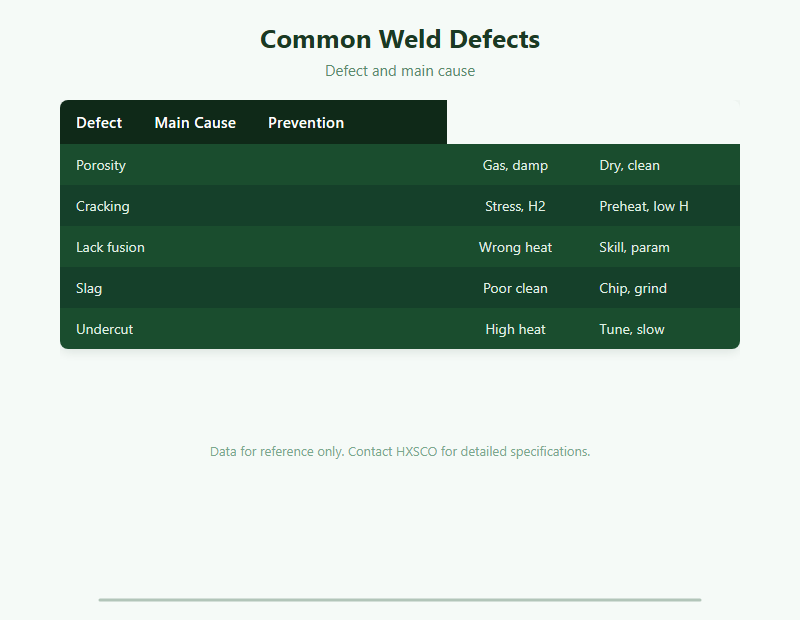
Why Defects Matter
Strength and code compliance lead the concern, with the basis in our Metal Strength Comparison and fatigue notes in our Metal Fatigue Guide; joining methods are in our Welding Joining Guide.
Stainless and Carbon Welds
Stainless needs low heat and clean prep and carbon needs hydrogen control, with detail in our Stainless Welding Guide and the steel basis in our Carbon Steel Supplier; corrosion risk is in our Corrosion Protection Guide.
Detection
Defects are found by visual, dye penetrant and ultrasonic test, with methods in our Non-Destructive Testing Guide e Quality Inspection Guide; buyers confirm grade via our Mill Test Certificate Guide.
Quality and Sourcing
Welded parts are checked before shipment, with methods in our Quality Inspection Guide and packing in our Export Packing Guide.
Get a Quote
Tell HXSCO your requirements and we will respond with a competitive quote and lead time.
Perguntas frequentes
Trapped gas from damp filler, rust or poor shielding.
Preheat, low-hydrogen rods and controlled cooling.
Dye penetrant and ultrasonic testing.
Yes – it weakens the joint and can fail in service.
Confirm weld procedure and inspection on the order.
Source Welded Parts with HXSCO
HXSCO supplies welded and fabricated steel and stainless parts with inspection and procedure records. Send drawings and quantity for a quote.