


Short answer: Passivation removes free iron and other contaminants from the surface of stainless steel, titanium and cobalt alloys and lets the metal form its own protective chromium/titanium oxide film, maximising corrosion resistance without etching the base. Citric-acid passivation (ASTM A967) has largely replaced nitric for safety and waste reasons, while electropolishing doubles as a passivation step; the right route depends on grade, prior machining and the service environment.
At a Glance
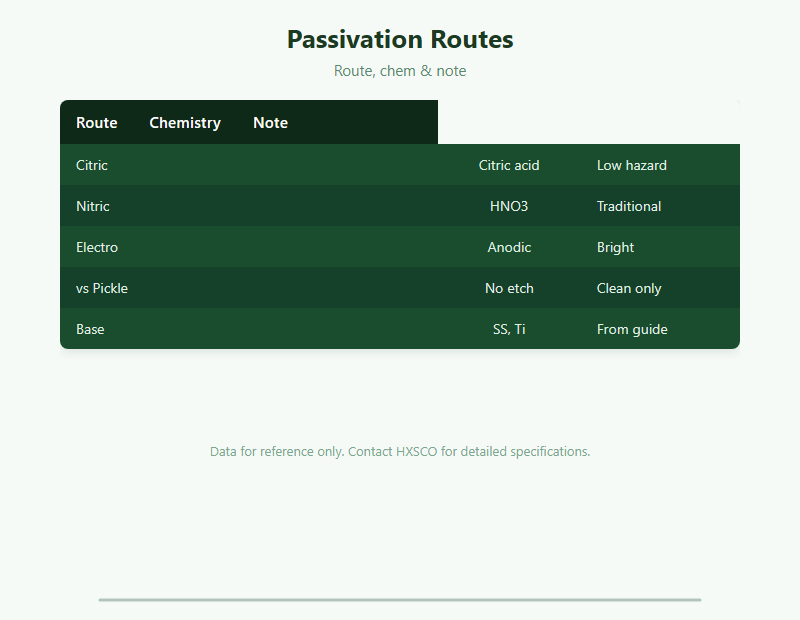
Passivation Routes
Passivation follows Passivation Vs Pickling and pairs with Metal Electropolishing Guide; relate to Stainless Steel 304 Properties en Metal Corrosion Inhibitor Guide.
Kwaliteit
Free-iron and film verified by Metal Ndt Guide, documented per Mill Test Certificate Guide. Compare Metal Surface Treatment Guide.
Supply & QA
Keep parts clean via How To Prevent Metal Rust; HXSCO supplies passivation-ready stainless.
Get a Quote
Tell HXSCO your requirements and we will respond with a competitive quote and lead time.
Veelgestelde vragen
Removing free iron so the alloy forms its own oxide film.
Citric is safer/lower-waste; nitric is traditional ASTM route.
No — passivation cleans; pickling etches scale.
Stainless, titanium and cobalt-chrome alloys.
HXSCO supplies stainless ready for citric passivation.
Source Passivation-Ready Stainless from HXSCO
HXSCO supplies stainless steel bar and fittings ready for citric or nitric passivation. Send your grade for a quote.