


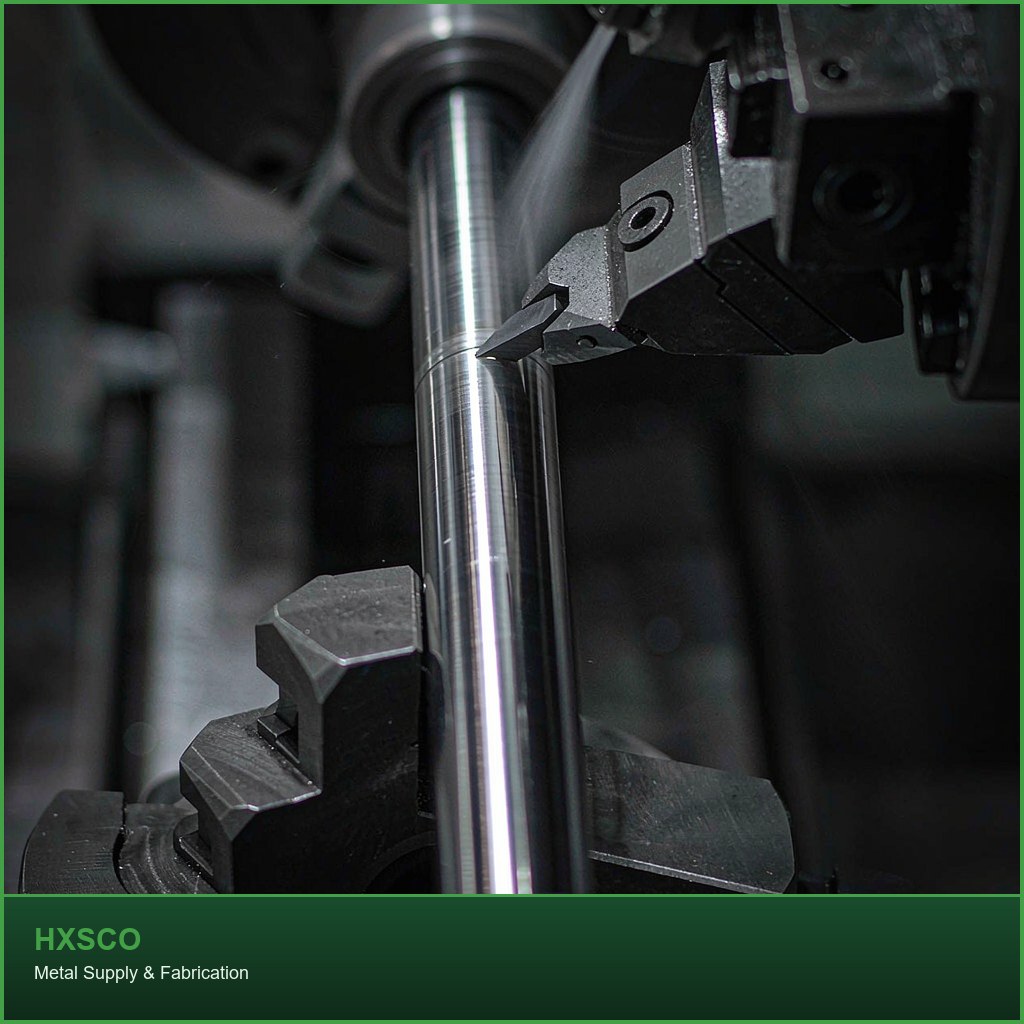
Short answer: CNC turning spins a workpiece against a stationary cutting tool to remove material and form precise cylindrical, conical and threaded features — shafts, bushings, pins and fittings — with repeatable tolerances down to a few microns. Computer control makes it the route to high-volume, high-accuracy round parts that would be slow or inconsistent to turn by hand.
At a Glance
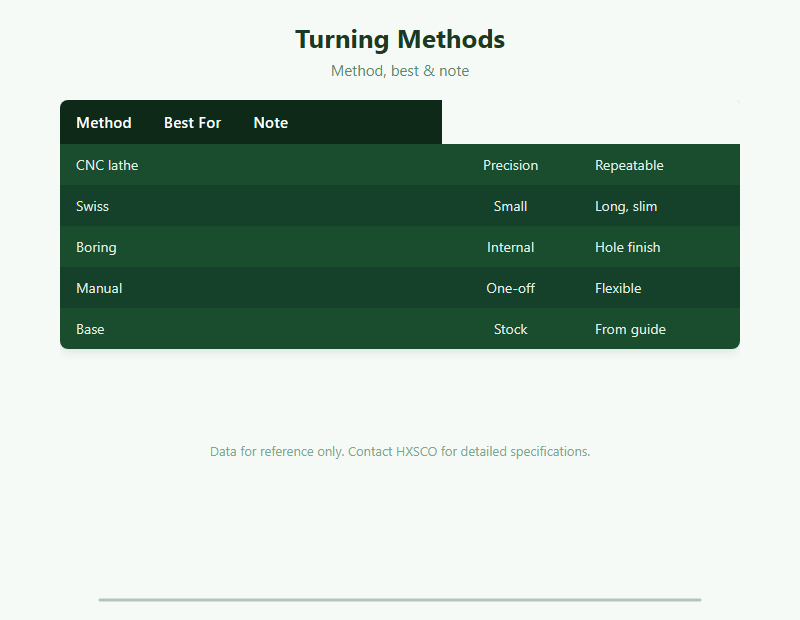
How CNC Turning Works
The chuck spins the part; relate to Metal Machinability Guide, Metal Edm Guide en Metal Grain Size Guide. Stock from Tool Steel Supplier en Stainless Steel Supplier turns cleanly.
Process Selection
Pick turning vs Metal Stamping Vs Machining en Metal Fine Blanking Guide; inspect by Metal Ndt Guide and document per Mill Test Certificate Guide; relate to Metal Wear Mechanisms Guide.
QA & Supply
Protect finished parts via How To Prevent Metal Rust. HXSCO supplies turned-grade bars and blanks to your drawing.
Get a Quote
Tell HXSCO your requirements and we will respond with a competitive quote and lead time.
Veelgestelde vragen
Spinning a part against a tool to form precise round features.
CNC is repeatable to microns and ideal for volume.
Shafts, bushings, pins, fittings and threaded components.
Steel, stainless, aluminium, brass, titanium, copper.
HXSCO supplies bar and blank stock suited to CNC turning.
Source Turned Metal from HXSCO
HXSCO supplies steel, stainless, aluminium and copper bar stock suited to CNC turning and precision shafts. Send your grade and quantity for a quote.