


Short answer: Hydrogen-induced cracking (HIC) is the stepwise blistering that forms inside pipeline and pressure-vessel steels when atomic hydrogen from sour (H2S) service collects at manganese sulphide inclusions; it is controlled by clean, low-sulphur steel, hardness caps and low-hydrogen welding.
At a Glance
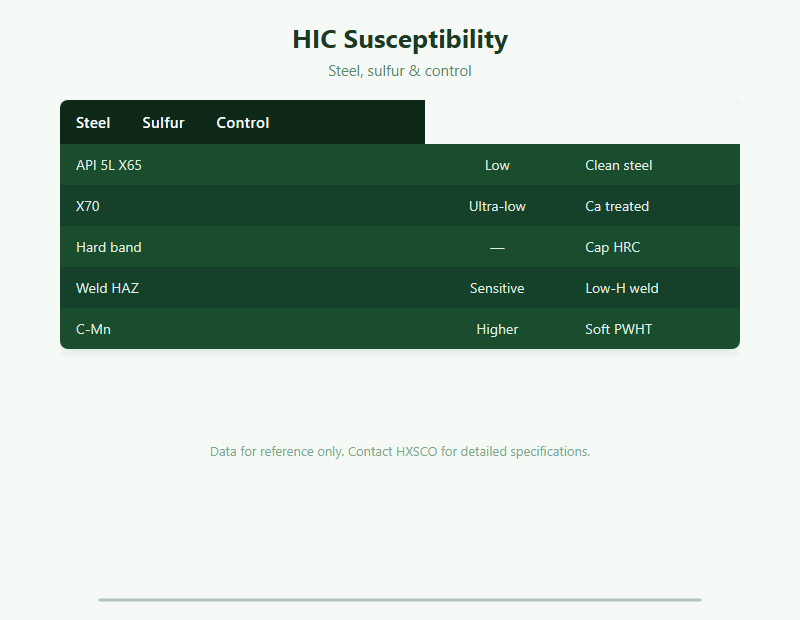
The Mechanism
Atomic hydrogen diffuses into the steel and recombines at elongated MnS inclusions, generating internal pressure that splits laminations stepwise. It is a close cousin of Metal Hydrogen Embrittlement Guide e Stress Corrosion Cracking, and a failure mode documented in Metal Failure Analysis Guide.
Where It Strikes
Sour-gas pipelines, refinery vessels and weld HAZs in humid H2S. Context in Steel Pipe Supplier, Galvanic Corrosion Guide e Metal Corrosion Fatigue Guide; couple control with How To Weld Stainless Steel low-hydrogen practice.
Prevention & Supply
Specify ultra-low-sulphur, calcium-treated steel, cap hardness (e.g. HRC 22), use low-hydrogen welds and PWHT; verify by Metal Ndt Guide (UT mapping) and document per Mill Test Certificate Guide. HXSCO supplies HIC-resistant line pipe and plate.
Get a Quote
Tell HXSCO your requirements and we will respond with a competitive quote and lead time.
Domande frequenti
Stepwise internal blistering in steel caused by hydrogen collecting at sulphide inclusions in sour service.
Atomic hydrogen from H2S corrosion enters the steel and recombines at elongated manganese sulphide inclusions.
Use ultra-low-sulphur, calcium-treated steel, cap hardness, apply low-hydrogen welding and PWHT.
Related but different: HIC is stepwise blistering without external stress; SSC needs applied tensile stress.
HXSCO supplies HIC/SSC-resistant line pipe and plate with NACE documentation on request.
Source HIC-Resistant Steel from HXSCO
HXSCO supplies HIC/SSC-resistant line pipe and plate with NACE documentation. Send your standard and quantity for a quote.