


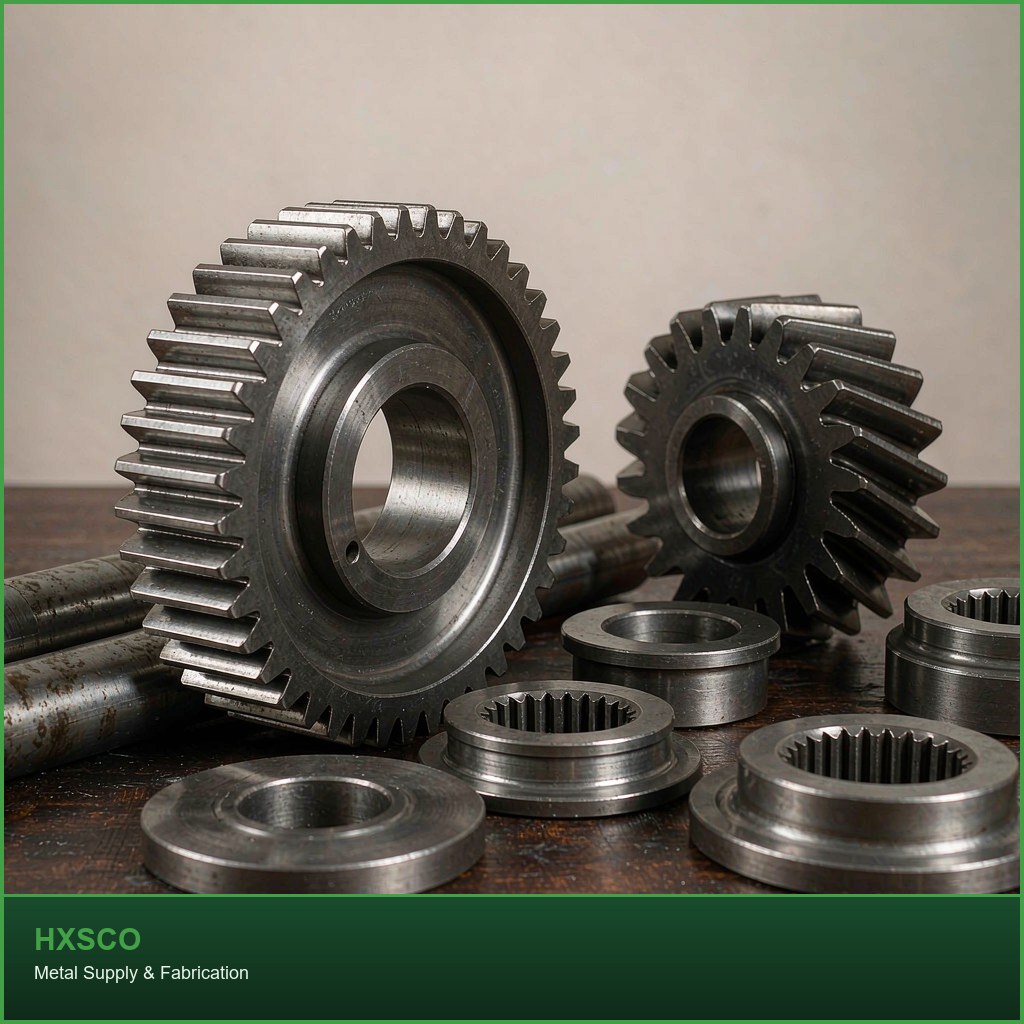
Short answer: Gears are made by cutting teeth into a blank — hobbing for spur and helical gears, shaping for internal teeth, broaching for splines — then hardened and finish-ground for quiet, accurate running. The method is chosen by tooth geometry, volume and the hardness the gear must reach in service, with tight control of pitch, profile and runout.
At a Glance
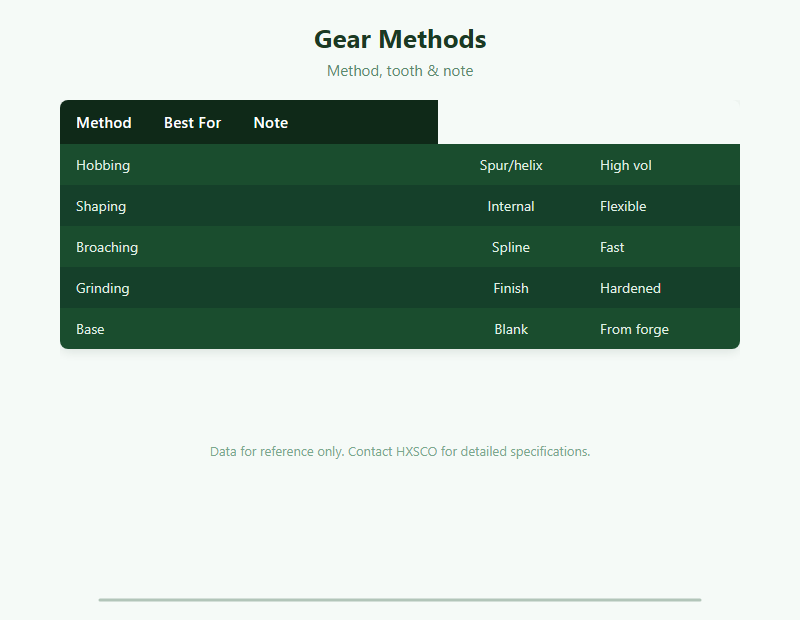
Gear Cutting Methods
Blanks come from Forging Vs Casting e Metal Radial Forging Guide; relate to Metal Machinability Guide e Metal Grinding Guide. Stock from Tool Steel Supplier is typical.
Quality & Heat
Harden by Metal Age Hardening Guide o Metal Case Hardening Guide; inspect by Metal Ndt Guide and document per Mill Test Certificate Guide. Relate to Metal Wear Mechanisms Guide.
QA & Supply
Protect gears via How To Prevent Metal Rust. HXSCO supplies gear-grade steel and blanks to spec.
Get a Quote
Tell HXSCO your requirements and we will respond with a competitive quote and lead time.
Domande frequenti
Hobbing, shaping and broaching cut teeth into a blank.
Hobbing is fast for spur/helical; shaping does internal teeth.
Grinding finishes hardened gears for quiet, accurate mesh.
Case-hardening and through-hardening alloy steels.
HXSCO supplies gear-grade steel and forged blanks.
Source Gear-Grade Metal from HXSCO
HXSCO supplies gear-grade alloy steel and forged blanks for hobbing, shaping and grinding. Send your spec and quantity for a quote.