


Short answer: Medical implants use titanium and cobalt-chromium for biocompatibility, corrosion resistance and strength, stainless for instruments and nitinol for self-expanding stents and guides, all chosen for tissue compatibility, fatigue life and clean finish under strict medical traceability.
At a Glance
What Implants Need
Biocompatibility and fatigue lead the choice, with the basis in our Metal Strength Comparison and fatigue notes in our Metal Fatigue Guide; resistance is in our Corrosion Resistance Guide.
Titanium and CoCr
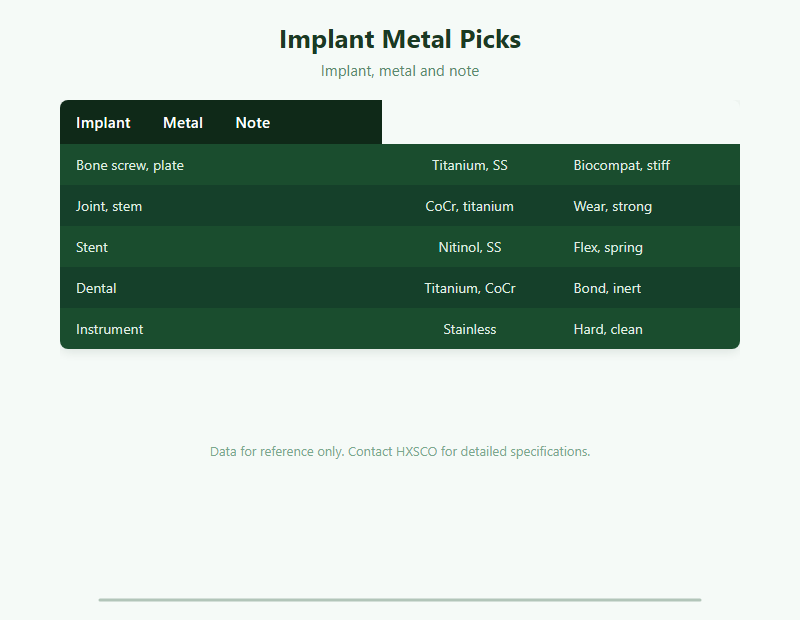
Titanium and cobalt-chromium serve bone and joint parts for inert bonding and wear, with context in our Medical Devices Guide and alloy notes in our Nickel Alloy Grades Guide; the stainless basis is in our Stainless Steel Supplier.
Stainless and Nitinol
Stainless instruments need hardness and clean finish and nitinol gives superelastic self-expanding forms, with surface care in our Surface Treatment Guide and passivation in our Passivation Guide.
Quality and Sourcing
Implant metal is checked by inspection, with methods in our Quality Inspection Guide e Non-Destructive Testing Guide; buyers confirm grade via our Mill Test Certificate Guide.
Get a Quote
Tell HXSCO your requirements and we will respond with a competitive quote and lead time.
Domande frequenti
Titanium and cobalt-chromium for biocompatibility and strength.
Nitinol is superelastic and self-expands at body temperature.
Hardened stainless for clean, corrosion-resistant instruments.
Passivation removes free iron and improves corrosion resistance.
Confirm grade, certificate and traceability for medical use.
Source Implant Metal with HXSCO
HXSCO supplies titanium, cobalt-chromium, stainless and nitinol stock for implants and instruments. Send grade and certificate needs for a quote.