


Short answer: Fertilizer plants use stainless and duplex for acid and urea service, carbon steel with lining for ammonia, abrasion-resistant steels for slurries, and galvanized or stainless for atmospheric storage, balancing corrosion, erosion and cost across the process train.
At a Glance
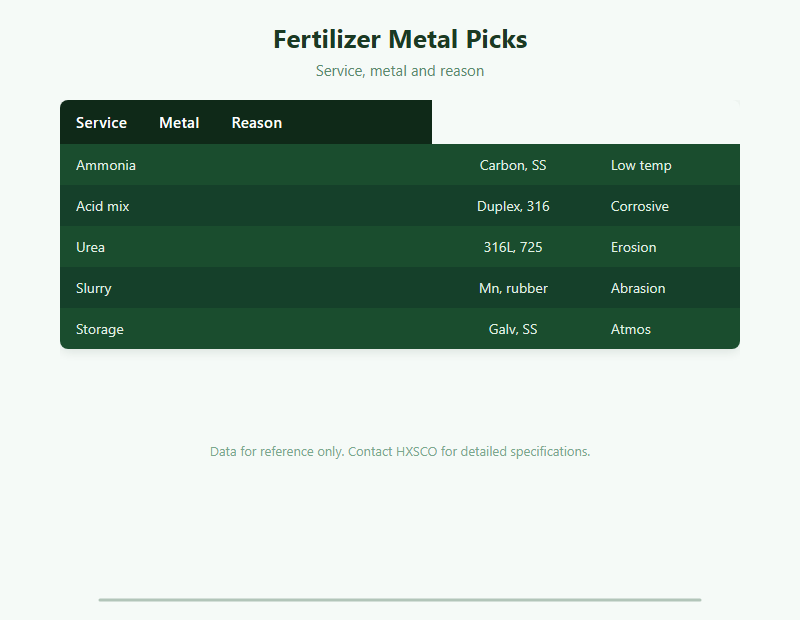
The Fertilizer Environment
Acids, ammonia and abrasive slurry attack the metal, so alloy choice is critical, with data in our Corrosion Resistance Guide and the process context in our Chemical Processing Guide.
Reactants and Pipes
Duplex and 316 resist acid and urea, while carbon steel handles ammonia with lining, detailed in our Duplex Stainless Supplier e Stainless Steel Supplier; piping is in our Piping and Pipeline Guide.
Pressure and Welding
Reactors and vessels need sound welds, with joining in our Welding Joining Guide and design in our Pressure Vessels Guide; nickel options are in our Nickel Alloy Supplier.
Standards and Sourcing
Process grades follow ASTM and EN rules, with checks in our Standards Comparison Guide; certification is in our Mill Test Certificate Guide and packing in our Export Packing Guide.
Get a Quote
Tell HXSCO your requirements and we will respond with a competitive quote and lead time.
Domande frequenti
Duplex and 316 stainless resist the mixed acid streams.
316L and urea-grade steels resist erosion-corrosion in urea.
Abrasion-resistant steel with rubber or ceramic lining.
Yes for ammonia and lined atmospheric duty at lower cost.
PMI and EN 10204 3.1 certificate confirm chemistry and service.
Source Fertilizer Plant Metal with HXSCO
HXSCO supplies stainless, duplex, nickel alloy and abrasion-resistant steel for reactors, pipes and tanks. Send your process duty for a quote.