


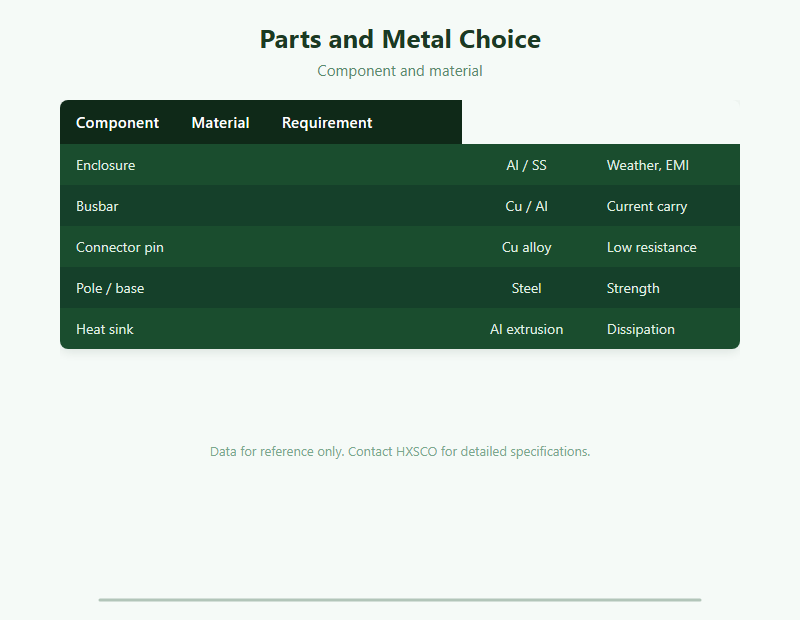
Short answer: EV charging stations use aluminum or stainless enclosures for weather and EMI protection, copper or aluminum busbar for current, copper-alloy connector pins for low resistance and steel poles for mounting, specified for outdoor durability and safety.
At a Glance
Enclosures and Weathering
The cabinet must shrug off rain, UV and tampering, so aluminum and stainless lead, with finishes in our Surface Treatment Guide e Finishing and Coating Guide; the coating choice is compared in our Galvanized vs Stainless guide and corrosion care in our Corrosion Resistance Guide.
Power Path: Busbar and Pins
Busbar moves charge from the feeder to the connector, with copper versus aluminum in our Busbar Copper vs Aluminum guide, and the storage link is our Battery Energy Storage Guide; fabrication is in our Extrusion Process Guide e Sheet Fabrication Guide.
Structure and Heat
Steel poles and bases hold the unit, extruded aluminum sinks heat from the electronics, and stampings from our Stamping Guide form brackets; the electronics frame is in our Electronics Guide.
Specifying for Safety and Life
Buyers set IP rating, thermal limit and conductivity, then confirm with our Quality Inspection Guide e Mill Test Certificate Guide before export packing per our Export Packing Guide.
Get a Quote
Tell HXSCO your requirements and we will respond with a competitive quote and lead time.
Domande frequenti
Aluminum or stainless steel for weather resistance and EMI shielding.
Copper for high-current DC fast chargers, aluminum where weight and cost matter.
Aluminum is light and conducts heat well for cooling power electronics.
Steel poles or wall plates with coated, corrosion-resistant hardware.
Mill cert plus IP and thermal verification before shipment.
Equip EV Chargers with HXSCO Metal
HXSCO supplies enclosure, busbar, connector and structural metal for EV charging stations with the finish and conductivity your design needs. Send your spec for a quote.