


Short answer: Electroplating deposits a thin, adherent metal layer from an electrolyte onto a conductive part to add corrosion resistance, wear life, solderability or decorative finish — chosen by the service environment.
At a Glance
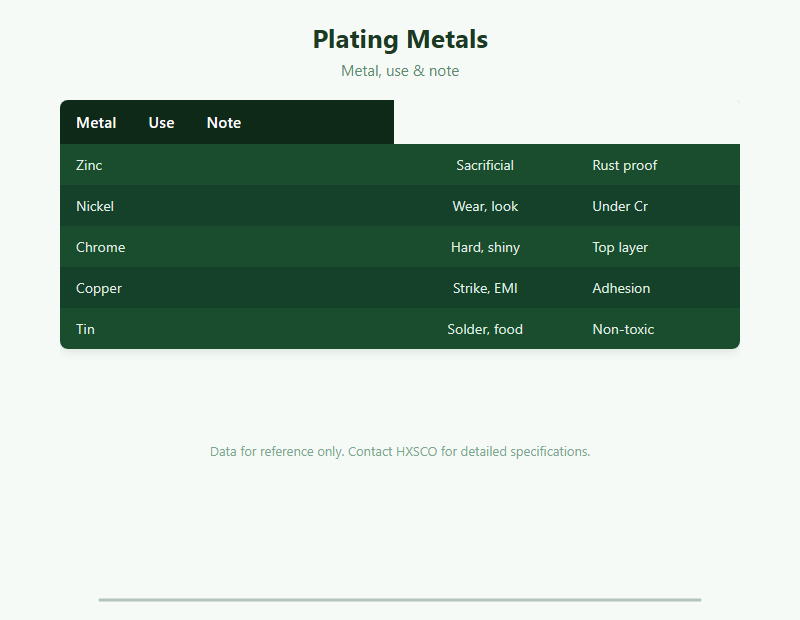
Choosing the Plate
Zinc sacrifices itself (Zinc Plating Vs Galvanizing); nickel and chrome add wear and shine (Nickel Plating Vs Chrome Plating); copper builds adhesion and EMI shielding. All sit within Metal Surface Treatment Guide and pair with Anodizing Vs Electroplating.
Process Control
Clean first (Metal Degreasing Guide), strike, plate, then rinse and passivate; watch defects in Coating Defects Guide and thickness in Metal Coating Thickness Guide. Tie finish to How To Prevent Metal Rust.
QA & Supply
Measure thickness and adhesion by Metal Ndt Guide, add Metal Corrosion Inhibitor Guide where needed, and document per Mill Test Certificate Guide. HXSCO supplies plate-ready stock.
Get a Quote
Tell HXSCO your requirements and we will respond with a competitive quote and lead time.
Domande frequenti
Depositing a thin metal layer from an electrolyte onto a conductive part by current.
Zinc — it corrodes preferentially and protects the steel underneath.
Nickel builds brightness and wear life; chrome is the hard, shiny top layer.
Solderability and food-safe, non-toxic contact surfaces.
HXSCO supplies stock prepared for electroplating with certificates on request.
Source Plate-Ready Metal from HXSCO
HXSCO supplies stock prepared for electroplating and finishing with certificates. Send your alloy and quantity for a quote.