


Short answer: Metal 3D printing builds parts layer by layer from Ti64, Inconel and stainless powder using SLM, binder jetting, EBM or DED, giving design freedom for aerospace, medical and tooling parts that are hard to machine, with powder quality and post-process inspection deciding the result.
At a Glance
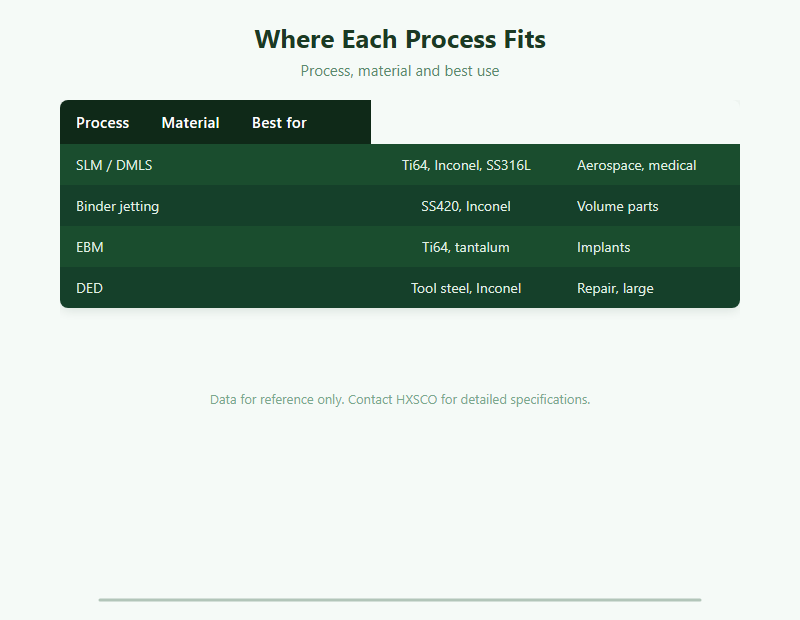
Powder and Process Basics
Additive manufacturing starts with gas-atomized powder and a laser or electron beam; the high-value alloys are covered in our Titanium Grades Guide e Nickel Alloy Grades Guide, and the aerospace pull is in our Aerospace Guide.
Material Selection
Ti64 and Ti grades serve implants and airframes, Inconel and superalloys serve heat and corrosion duty, and stainless serves general parts; the grade map is in our Inconel Supplier e Hastelloy Supplier pages and the medical fit in our Medical Devices Guide.
Design, Support and Post-Processing
Parts need orientation, supports and heat treatment, then machining and surface finish; the plan is in our Machining Guide, Heat Treatment Guide e Surface Treatment Guide.
QA and Sourcing
Density, porosity and chemistry are verified before release; the checks are in our Quality Inspection Guide, certification in our Mill Test Certificate Guide and packing in our Export Packing Guide.
Get a Quote
Tell HXSCO your requirements and we will respond with a competitive quote and lead time.
Domande frequenti
Ti64, Inconel 625 and 718, 316L stainless and tool steel are the workhorse additive alloys.
Properly processed it nears wrought properties, with fatigue set by density and heat treatment.
Support removal, heat treatment, machining and surface finish are typical before use.
Particle size, flow, oxygen and chemistry are tested per batch and certificate.
Yes – we supply qualified Ti, nickel and stainless stock and powder on request.
Specify Additive Metal with HXSCO
HXSCO supplies Ti64, Inconel and stainless for metal 3D printing with powder data and certificate. Tell us your process and alloy for a quote.