


Short answer: Refractory metals – tungsten, rhenium, tantalum, molybdenum and niobium – are defined by very high melting points above 2000 C and retain strength and stability at extreme heat, making them essential for furnaces, filaments, chemical plant, capacitors and aerospace; this guide compares their melting points and uses and shows where to source each with our supplier and guide network.
At a Glance
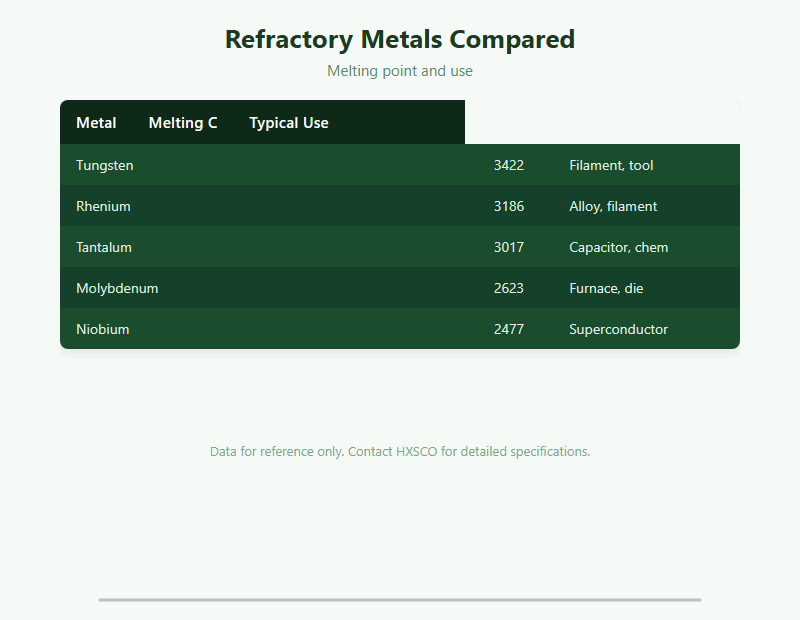
What Makes a Metal Refractory
A melting point above about 2000 C plus hot strength, with the property basis in our Metal Strength Comparison dan Density Comparison Guide; corrosion context is in our Corrosion Resistance Guide.
Molybdenum and Tungsten
Mo and W lead furnace and tooling use, supplied via our Molybdenum Supplier dan Tungsten Supplier; carbide detail is in our Tungsten Carbide Guide.
Tantalum, Niobium and Rhenium
Ta serves chemical and capacitor use, Nb serves superconductors and Re strengthens alloys, with high-heat context in our High-Temperature Alloys Guide dan Semiconductor Equipment Guide.
How to Choose and Buy
Match metal to temperature and environment and confirm certificate; certification is in our Mill Test Certificate Guide and export packing in our Export Packing Guide; machining is in our Machining Guide.
Get a Quote
Tell HXSCO your requirements and we will respond with a competitive quote and lead time.
Pertanyaan yang Sering Diajukan
Tungsten at about 3422 C.
Chemical plant linings and capacitor anodes.
Superconducting magnets and alloy strengthening.
Strengthening tungsten and superalloy filaments.
Request a mill test certificate with chemistry.
Source Refractory Metals
HXSCO supplies molybdenum, tungsten and related refractory metals. Tell us the metal, form and quantity for a quote.