



Short answer: Die casting gives tight tolerances, smooth surfaces and fast cycles for medium to high volumes but needs expensive tooling; sand casting suits low volumes and large parts with cheap patterns – the processes are described in our Die Casting Guide dan Metal Casting Guide.
At a Glance
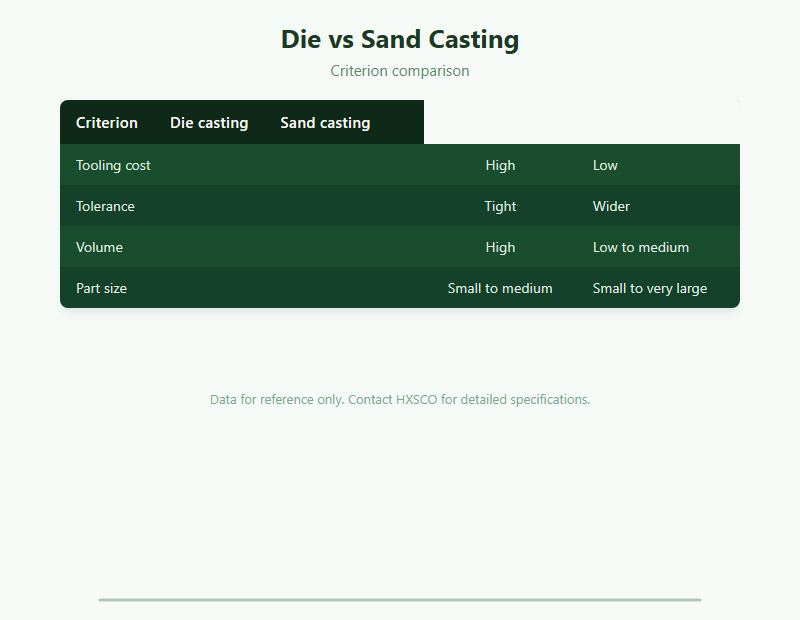
The Two Processes at a Glance
Die casting injects metal into a reusable steel die under pressure; sand casting pours metal into a disposable sand mould; the basics are in our Metal Casting Guide.
Tolerance and Surface Finish
Die casting achieves tighter tolerances and smoother surfaces than sand casting, reducing machining; see our Finishing Guide.
Tooling Cost and Volume
Die tooling is costly but amortises over large runs; sand patterns are cheap for prototypes and short runs; costing is in our Price Quotation Guide.
Part Size and Alloys
Sand casting handles very large parts and a wide alloy range including cast iron; die casting favours smaller non-ferrous parts; see our Alloys Guide dan Cast Iron Guide.
Lead Time and Flexibility
Sand patterns are quicker to make, while die tooling takes longer but repeats precisely; planning is in our MOQ and Lead Time Guide.
How to Decide
Choose by volume, tolerance, size and alloy; the forged alternative is in our Cast vs Forged Guide and supplier selection in our Choose a Supplier Guide.
Get a Quote
Tell HXSCO your requirements and we will respond with a competitive quote and lead time.
Pertanyaan yang Sering Diajukan
Die casting gives tighter tolerances.
Sand casting, due to low pattern cost.
Sand casting.
Die casting.
Yes – ask about your part and volume.
Choose the Right Casting Route
HXSCO supplies both die castings and sand castings with certificates and machining. Send your drawing and volume for a process recommendation and quote.