


Short answer: Refractory metals – tungsten, rhenium, tantalum, molybdenum and niobium – are defined by very high melting points above 2000 C and retain strength and stability at extreme heat, making them essential for furnaces, filaments, chemical plant, capacitors and aerospace; this guide compares their melting points and uses and shows where to source each with our supplier and guide network.
At a Glance
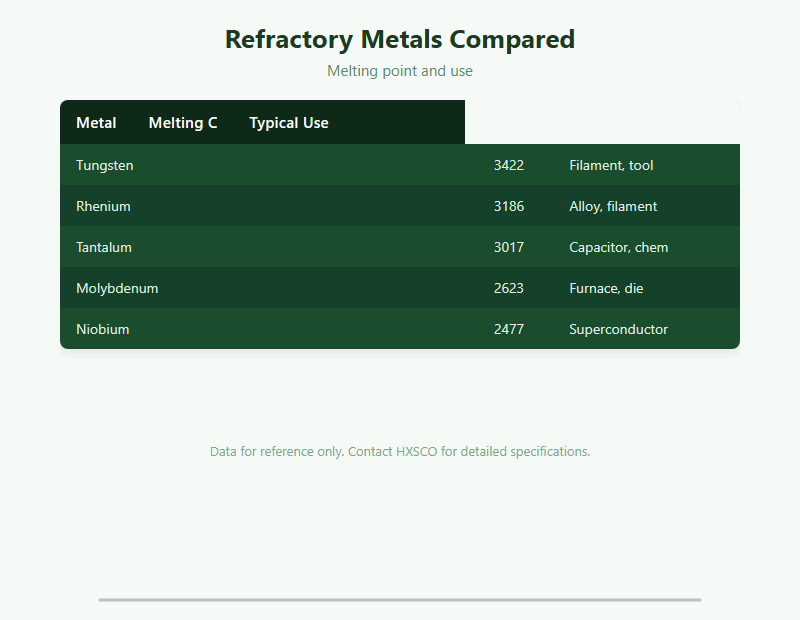
What Makes a Metal Refractory
A melting point above about 2000 C plus hot strength, with the property basis in our Metal Strength Comparison и Density Comparison Guide; corrosion context is in our Corrosion Resistance Guide.
Molybdenum and Tungsten
Mo and W lead furnace and tooling use, supplied via our Molybdenum Supplier и Tungsten Supplier; carbide detail is in our Tungsten Carbide Guide.
Tantalum, Niobium and Rhenium
Ta serves chemical and capacitor use, Nb serves superconductors and Re strengthens alloys, with high-heat context in our High-Temperature Alloys Guide и Semiconductor Equipment Guide.
How to Choose and Buy
Match metal to temperature and environment and confirm certificate; certification is in our Mill Test Certificate Guide and export packing in our Export Packing Guide; machining is in our Machining Guide.
Get a Quote
Tell HXSCO your requirements and we will respond with a competitive quote and lead time.
Часто задаваемые вопросы
Tungsten at about 3422 C.
Chemical plant linings and capacitor anodes.
Superconducting magnets and alloy strengthening.
Strengthening tungsten and superalloy filaments.
Request a mill test certificate with chemistry.
Source Refractory Metals
HXSCO supplies molybdenum, tungsten and related refractory metals. Tell us the metal, form and quantity for a quote.