


Short answer: Corrosion under insulation (CUI) is hidden attack on piping and equipment beneath thermal insulation, driven by trapped water and thermal cycling — most dangerous on carbon steel and austenitic stainless, and prevented by sealing, cladding and planned inspection.
At a Glance
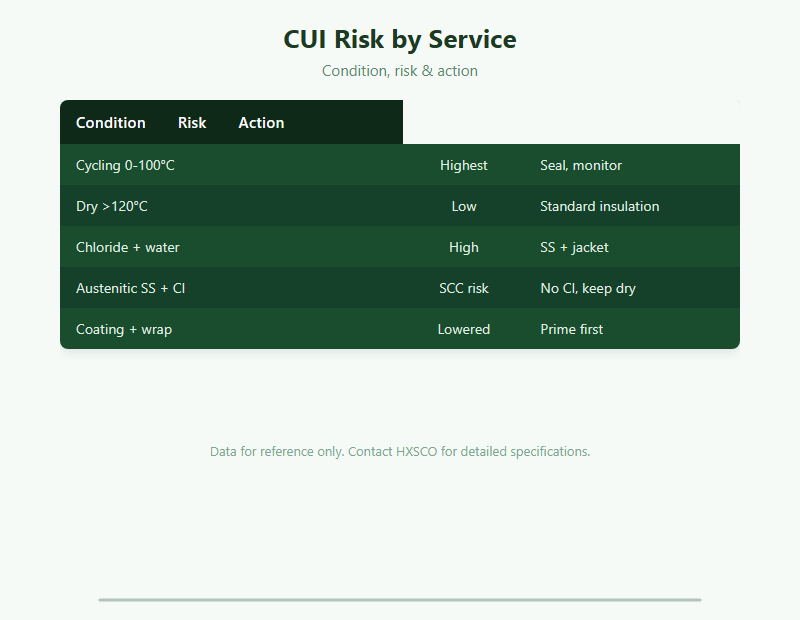
What CUI Is
CUI starts when water enters degraded insulation jacketing and wets the metal through repeated heating and cooling. Carbon steel rusts from outside in; austenitic stainless can suffer chloride stress-corrosion cracking if the water carries chlorides. It is a hidden sibling of Galvanic Corrosion Guide dan Stress Corrosion Cracking, and it explains failures you cannot see from outside.
Detection & Inspection
Because the damage is hidden, CUI is found by removing lagging at planned intervals, by Metal Ndt Guide (UT thickness scans, radiography, profilometry) or by real-time wireless sensors. It is most aggressive in the 0–100 °C cycling band and on austenitic stainless exposed to chlorides. Surface and coating condition before insulation matters — see Metal Surface Treatment Guide.
Prevention
Seal and clad the insulation so water cannot enter; use a robust coating (see Hot Dip Galvanizing Process dan Zinc Plating Vs Galvanizing) and a weather barrier; keep austenitic stainless dry and chloride-free; and apply Cathodic Protection Guide only where wet and compatible. General rust control is in How To Prevent Metal Rust.
Get a Quote
Tell HXSCO your requirements and we will respond with a competitive quote and lead time.
Pertanyaan yang Sering Diajukan
CUI is hidden corrosion of piping and equipment beneath thermal insulation, caused by water trapped through cycling temperatures and degraded jacketing.
Carbon steel and austenitic stainless steel are most at risk — stainless can develop chloride stress-corrosion cracking under wet, chlorided insulation.
CUI is detected by removing lagging at planned intervals, by UT/radiographic NDT (see our NDT guide) or by embedded sensors, since the damage is hidden.
Prevent CUI by sealing and cladding insulation, coating the base metal, keeping stainless dry and chloride-free, and inspecting on a planned schedule.
Protect Against CUI with HXSCO
HXSCO supplies coated and clad piping and equipment stock for CUI service, with NDT and mill certificates. Send your service and quantity for a quote.