


Short answer: High-strength low-alloy steel uses small additions of niobium, vanadium and titanium to reach yield strengths of 345 to 690 MPa at similar weight and cost to carbon steel, so it lets designers thin sections and cut weight in bridges, trucks, cranes and towers, with weldability maintained by low carbon and controlled chemistry, supplied as certified plate and section with mill test certificate.
At a Glance
What HSLA Does
Low carbon plus micro-alloying gives strength without heat treat, with the basis in our Metal Strength Comparison and weight notes in our Density Comparison Guide; the steel basis is in our Carbon Steel Supplier.
Grades and Use
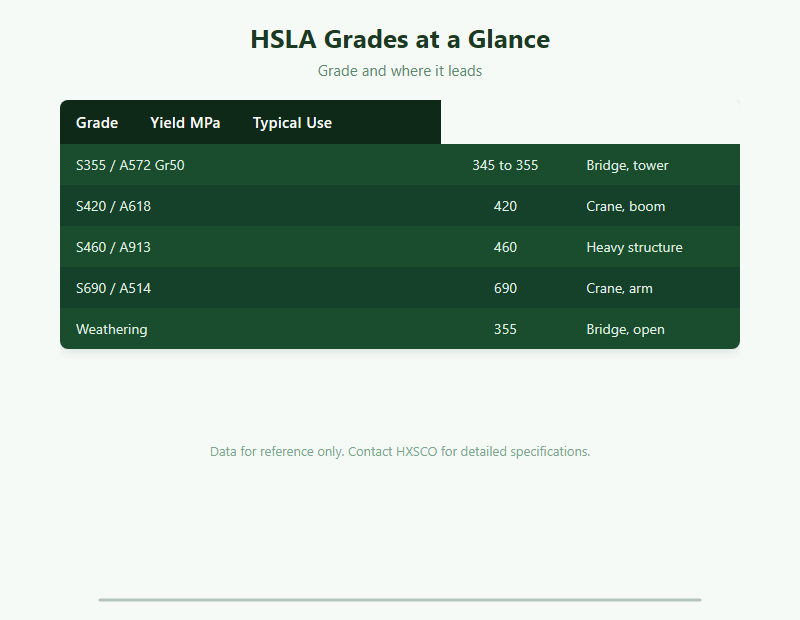
S355 and A572 serve general structures and S690 and A514 serve crane arms, with the section basis in our Steel Section Supplier and construction context in our Construction Structural Guide.
Welding and Care
HSLA welds with low heat input and preheat where needed, with welding in our Welding Joining Guide and cutting in our Cutting Processes Guide; coating is in our Corrosion Protection Guide.
Quality and Sourcing
HSLA is checked by inspection, with methods in our Quality Inspection Guide; buyers confirm yield via our Mill Test Certificate Guide and pack per our Export Packing Guide.
Get a Quote
Tell HXSCO your requirements and we will respond with a competitive quote and lead time.
Questions fréquemment posées
High-strength low-alloy steel with micro-alloying for strength.
More yield strength at similar weight and cost.
Yes – low carbon keeps it weldable with care.
S690 or A514 for the highest strength.
Confirm yield and certificate, then pack for export.
Source HSLA Steel with HXSCO
HXSCO supplies S355, S420, S460 and S690 HSLA plate and section with mill certificate. Send grade, size and quantity for a quote.