



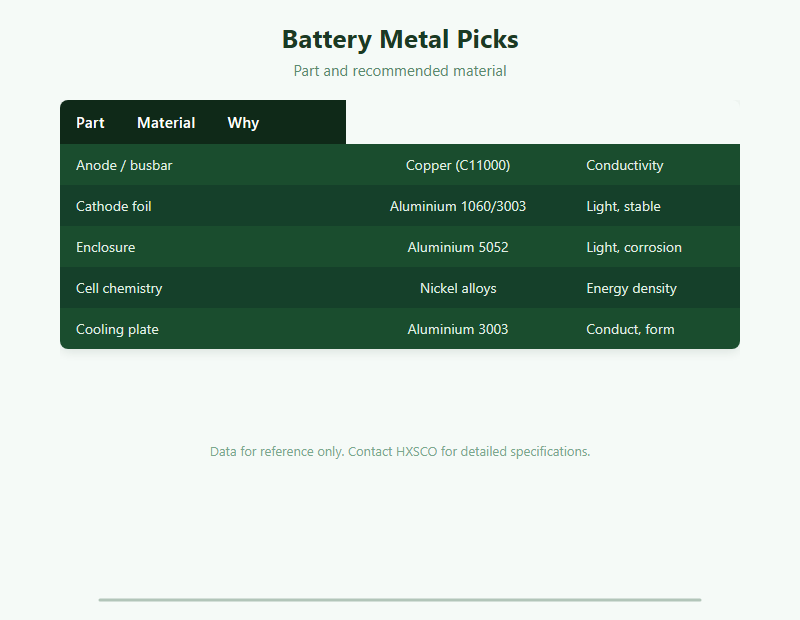
Short answer: Batteries and energy storage lean on copper for anodes and busbars, aluminium for cathode foil and enclosures, and nickel for cell chemistry, with grade chosen for electrical conductivity, weight and long corrosion life in thermal-cycled packs.
At a Glance
Conductors and Busbars
Cells connect through copper anodes and busbars where conductivity rules; the conductor choice is in our Copper Supplier et Busbar Copper vs Aluminium guide, with rod and bar stock in our Copper Bar Rod line.
Foil, Enclosure and Weight
Cathode foil and pack enclosures use light, corrosion-stable aluminium; the alloy choice is in our Aluminum Supplier, 5052 vs 6061 et Qu'est-ce que l'alliage d'aluminium ?, with the weight trade-off in our Steel vs Aluminium page.
Chemistry and Nickel
High-energy cells add nickel for density and life; the family is in our Nickel Alloy Supplier, and corrosion care in our Corrosion Resistance Guide.
Thermal Management
Cooling plates and frames need formable, conductive aluminium that survives thermal cycling; the stability angle is in our Fatigue Guide and forming in our Extrusion Profiles Guide.
Get a Quote
Tell HXSCO your requirements and we will respond with a competitive quote and lead time.
Questions fréquemment posées
It is the anode current collector and the standard for low-loss busbars.
It is light, conductive and stable against the cathode chemistry.
In high-energy cell chemistries to raise density and cycle life.
5052 aluminium for light weight and corrosion resistance.
Aluminium wherever conduction and mass both matter.
Supply Battery Metal with HXSCO
HXSCO supplies copper, aluminium and nickel grades for battery and storage systems. Send your BOM and we will quote.