


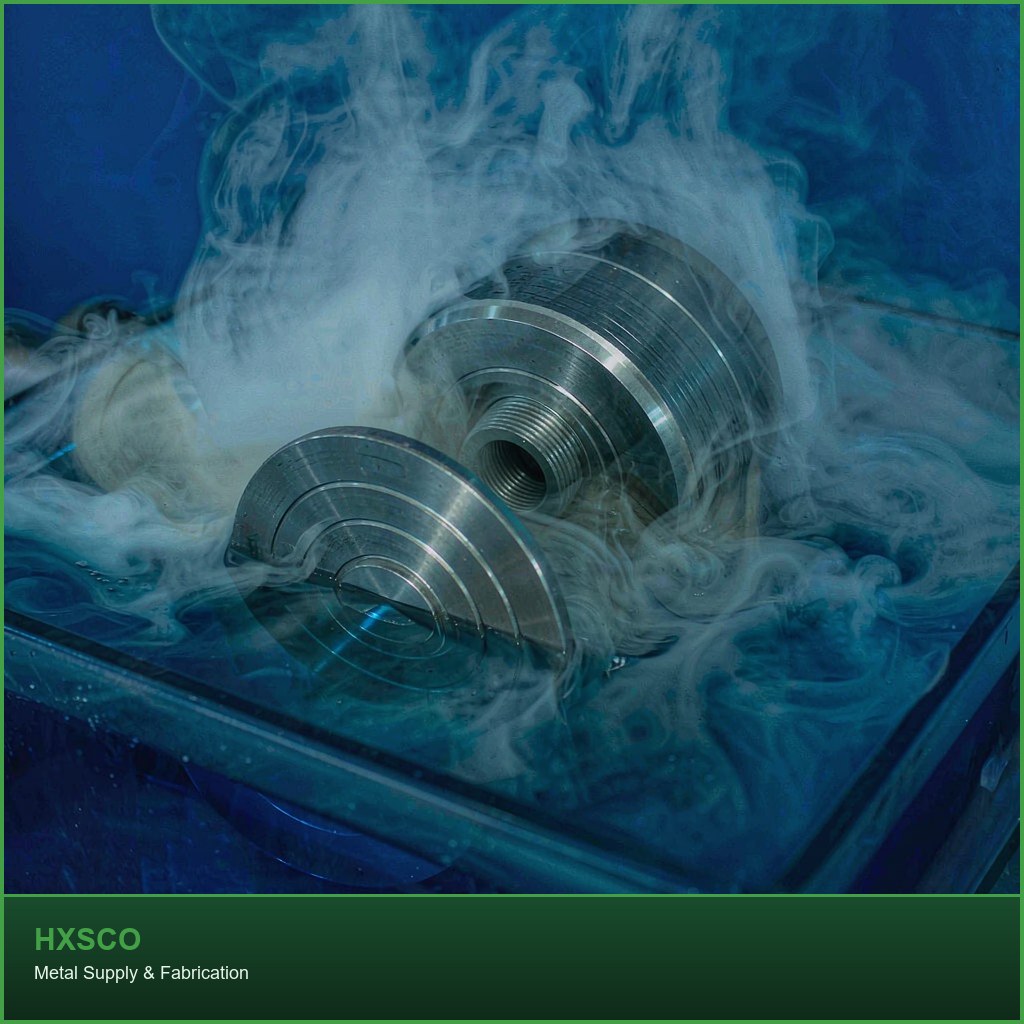
Short answer: Cryogenic treatment holds a quenched steel (or other alloy) at around -196 °C (liquid nitrogen) for many hours, completing the martensitic transformation, precipitating fine carbides and relieving residual stress. The result is improved dimensional stability, finer wear resistance and longer life for cutting tools, bearings, gears, dies and precision components — a complement to tempering, not a replacement.
At a Glance
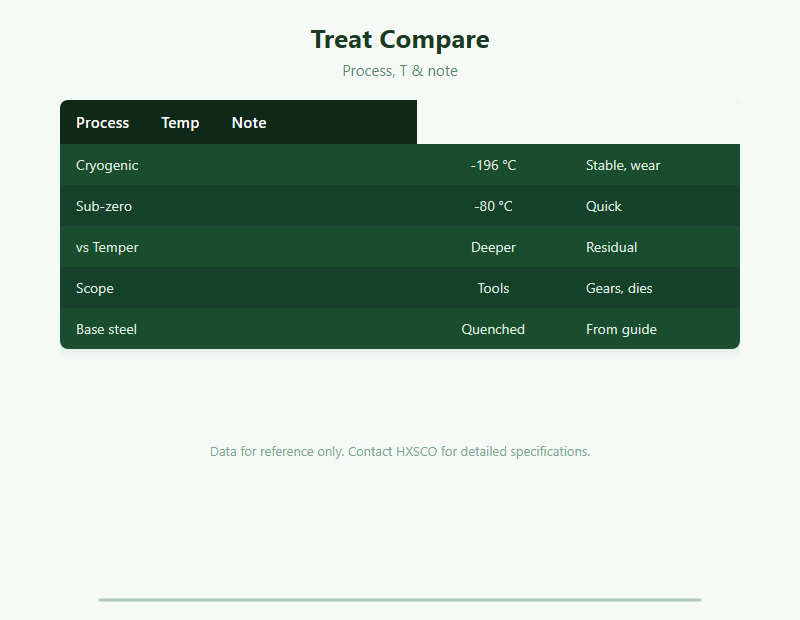
Cryo vs Other
Cryo follows Metal Tempering Guide and relates to Metal Martensite Guide; avoid Metal Quench Cracking Guide by controlled cooling.
Qualité
Residual stress and stability checked by Metal Residual Stress Guide, documented per Mill Test Certificate Guide. Relate to Metal Wear Mechanisms Guide.
Supply & QA
Machine after treatment via Metal Machinability Guide; protect via How To Prevent Metal Rust. HXSCO supplies quenched-and-tempered stock.
Get a Quote
Tell HXSCO your requirements and we will respond with a competitive quote and lead time.
Questions fréquemment posées
Holding metal at ~-196 °C to finish transformation.
Cryo completes martensite + relieves stress; tempering sets ductility.
Stability, wear resistance, longer tool/gear/die life.
Quenched steels, tool steels, some cast irons and carbides.
HXSCO supplies quenched-and-tempered steel ready for cryo.
Source Cryo-Ready Steel from HXSCO
HXSCO supplies quenched-and-tempered steel and tool steel ready for cryogenic treatment. Send your grade for a quote.