


Short answer: Creep is slow, time-dependent deformation under sustained load at high temperature; it is controlled by choosing a temperature-rated alloy, limiting design stress below the allowable creep rate, and inspecting for rupture and distortion over the plant life.
At a Glance
What Creep Is
Creep proceeds by primary, secondary and tertiary stages until rupture, with temperature limits tied to the alloy, described in our Nickel Alloy Grades Guide and the strength basis in our Comparaison des forces.
Alloy Selection
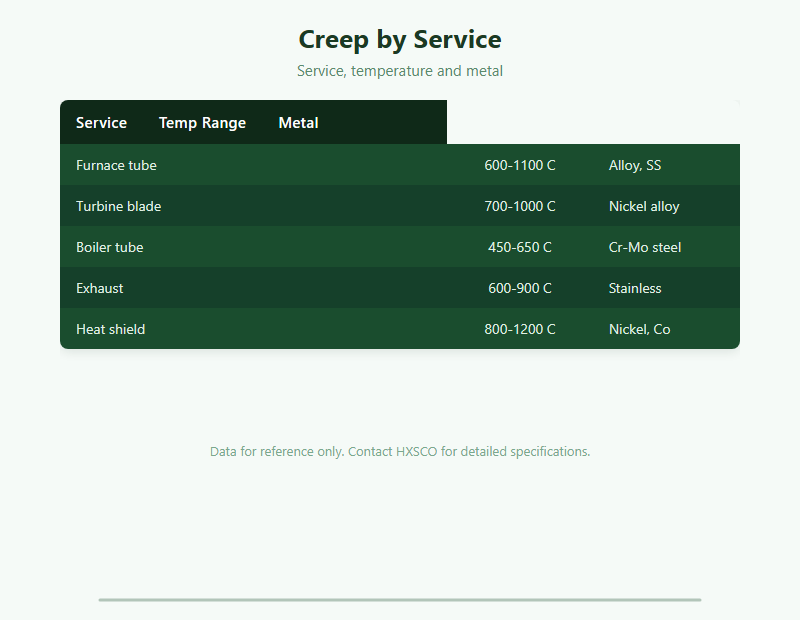
Chromium-molybdenum steel serves boilers, stainless serves exhaust, and nickel alloys serve the hottest turbine duty, with the grade map in our Power Generation Guide and corrosion care in our Corrosion Resistance Guide.
Design Stress and Life
Engineers set design stress from creep-rupture data with margin, with heat treatment detail in our Heat Treatment Guide and the hardness check in our Hardness Comparison; fabrication is in our Welding Joining Guide.
Inspection and Sourcing
Plants monitor creep strain and inspect for bulging and cracks, with methods in our Quality Inspection Guide; buyers confirm temperature rating and cert via our Mill Test Certificate Guide and pack per our Export Packing Guide.
Get a Quote
Tell HXSCO your requirements and we will respond with a competitive quote and lead time.
Questions fréquemment posées
Slow, permanent deformation under sustained load at high temperature.
Above roughly 40 percent of the melting point, so hundreds of degrees for steel and lower for lead.
Nickel and cobalt alloys resist creep best at the highest temperatures.
From creep-rupture curves of stress and temperature versus time to failure.
By measuring strain, bulging and wall loss and comparing against allowable limits.
Specify High-Temperature Metal with HXSCO
HXSCO supplies Cr-Mo steel, stainless and nickel alloys rated for creep service in furnaces, boilers and turbines with temperature certificate. Send your duty for a quote.