


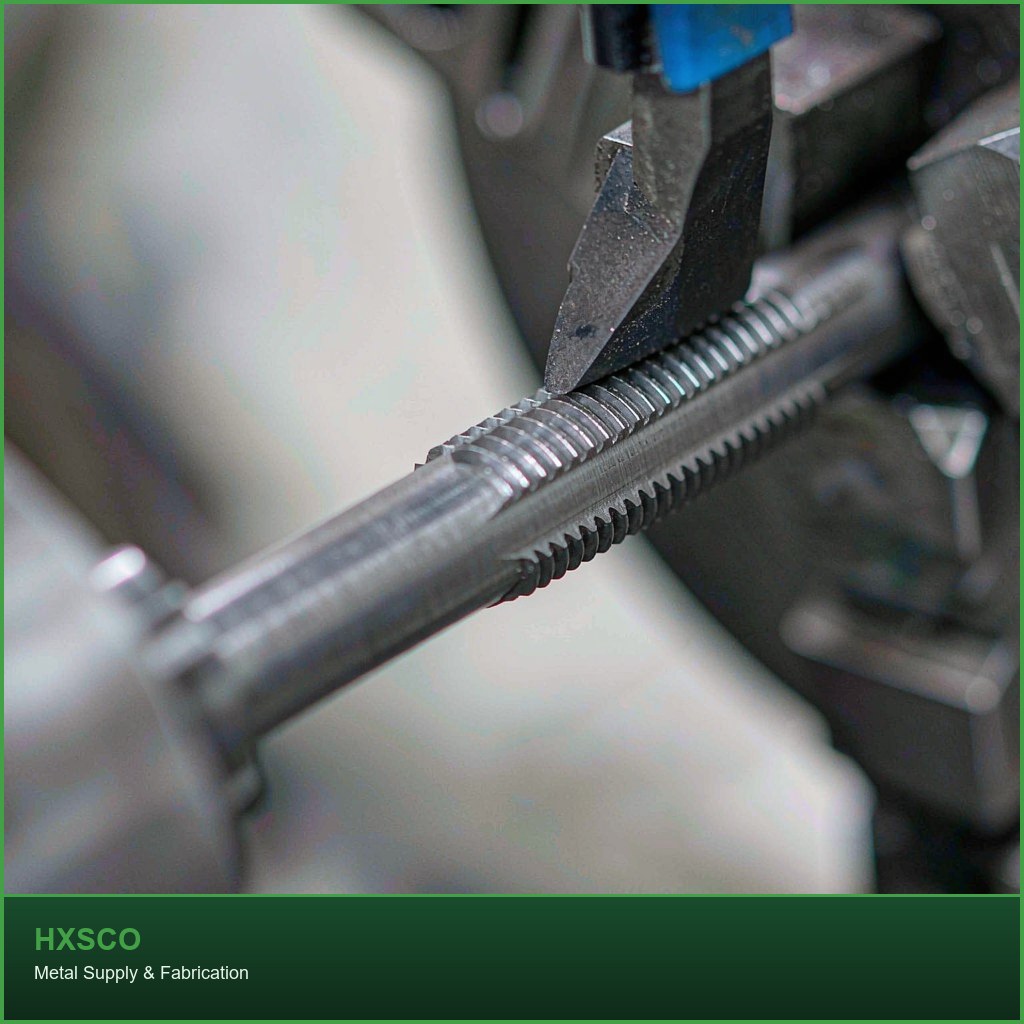
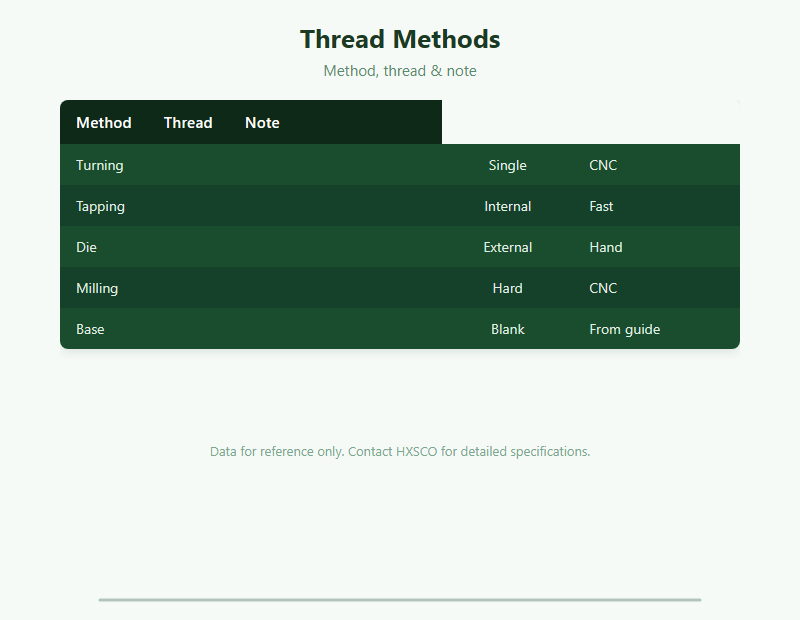
Short answer: Threads are cut by single-point turning, tapping (internal), die (external) or CNC milling — removing material to form the helix — as an alternative to thread rolling that displaces metal. Cutting suits one-offs, hard materials and internal threads; rolling suits high-volume external threads with stronger, burnished roots. The choice balances strength, volume and the material’s hardness.
At a Glance
Cut vs Roll
Compare Metal Rolled Thread Guide y Metal Cnc Turning Guide; relate to Metal Machinability Guide y Metal Hardness Testing Methods. Deburr per Metal Burr Deburring Guide.
Calidad
Pitch and root matter; inspect by Metal Ndt Guide and document per Mill Test Certificate Guide. Relate to Metal Wear Mechanisms Guide.
QA & Supply
Protect threads via How To Prevent Metal Rust. HXSCO supplies thread stock and Fasteners Supplier parts.
Get a Quote
Tell HXSCO your requirements and we will respond with a competitive quote and lead time.
Preguntas frecuentes
Turning, tapping, die and CNC milling remove material.
Cut suits one-off/hard/internal; roll is stronger, high volume.
Cutting an internal thread with a tap.
For hard materials and complex/large threads.
HXSCO supplies bar stock and fasteners for threading.
Source Thread-Grade Metal from HXSCO
HXSCO supplies bar stock and fasteners suited to thread cutting and rolling. Send your grade and quantity for a quote.