


Short answer: Non-metallic inclusions are oxide, sulfide and nitride particles trapped in metal during melting and deoxidation; their type, size and distribution control fatigue life, machinability and cleanliness, so they are rated and controlled by steelmakers.
At a Glance
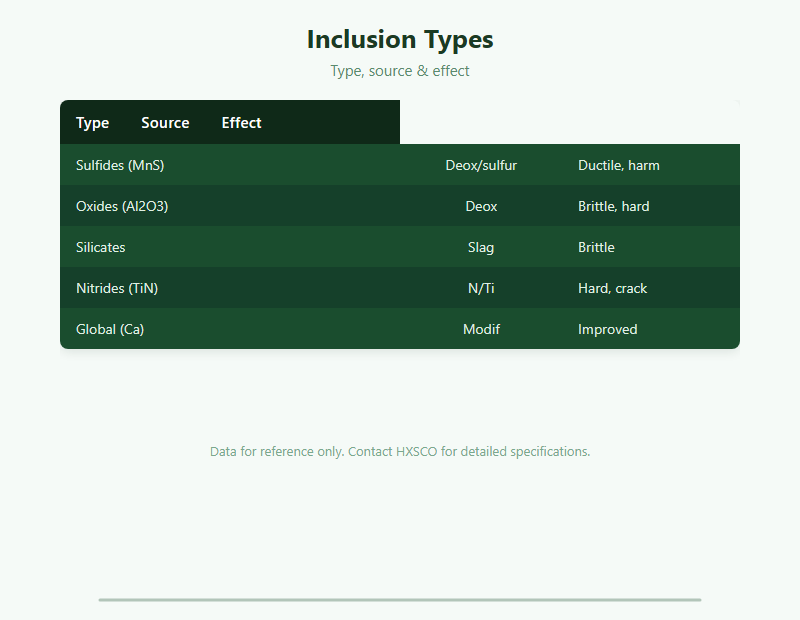
Where Inclusions Come From
They form during deoxidation and solidification from residual oxygen, sulfur and nitrogen. They are the subject of Metal Metallography Guide y Grain Structure Metals, and their brittle ones drive Metal Fatigue Endurance Limit y Metal Failure Analysis Guide crack initiation.
Rating & Effects
Standards rate inclusions (A/B/C/D thin/thick) under the microscope; brittle alumina clusters hurt fatigue and cause Weld Defects Guide issues, while globular sulphides improve Metal Machinability Guide. Calcium treatment makes inclusions benign. Relate to Steel Carbon Equivalent Guide and documented cleanliness per specification.
Control, QA & Supply
Cleaner melts, ladle refining and desulfurisation cut harmful inclusions; verify with Metal Ndt Guide, metallography and Mill Test Certificate Guide. HXSCO supplies clean, inclusion-controlled stock for fatigue-critical duty.
Get a Quote
Tell HXSCO your requirements and we will respond with a competitive quote and lead time.
Preguntas frecuentes
Oxide, sulfide and nitride particles trapped in metal during melting, deoxidation and solidification.
Brittle ones initiate fatigue and fatigue cracks; their size and type affect life, machinability and cleanliness.
Brittle, hard alumina clusters and TiN particles — they act as crack starters in fatigue.
By clean melting, ladle refining, desulfurisation and calcium treatment to make them globular.
HXSCO supplies clean, inclusion-controlled stock with metallography and certificates on request.
Source Clean Steel from HXSCO
HXSCO supplies clean, inclusion-controlled steel with metallography and certificates for fatigue-critical duty. Send your grade and quantity for a quote.