


Short answer: Both are copper alloys, but brass is mainly copper plus zinc (golden, easy to machine, great for fittings and decor), while bronze is copper plus tin (or aluminum/silicon), darker, harder, and superior for bearings, marine, and wear parts. Choose brass for machinability and looks; choose bronze for strength, wear, and seawater service.
At a Glance
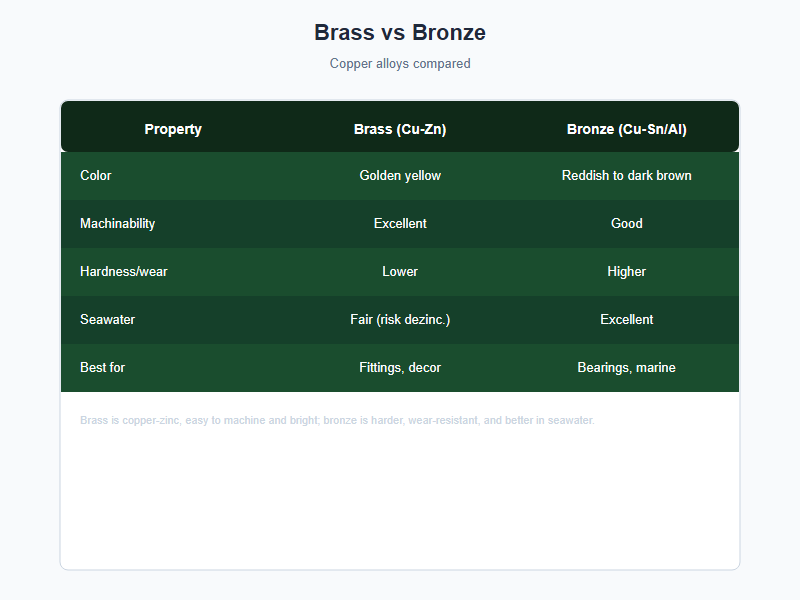
Composition and Color
Latón is copper with zinc (often 10-40%); some grades add lead for machining or manganese for strength. It is golden-yellow and takes a bright finish. Bronce is historically copper with tin, though modern ‘bronzes’ use aluminum, silicon, or manganese instead of tin. It is reddish-brown to dark brown.
Strength, Wear, and Corrosion
The chart shows bronze generally wins on hardness, wear resistance, and fatigue – ideal for bearings and bushings. Brass wins on machinability and formability, and both resist corrosion well, though bronze (especially silicon/aluminum bronze) is the better choice in seawater.
Aplicaciones típicas
- Brass: valves, fittings, musical instruments, decorative trim, ammunition, electrical connectors.
- Bronze: bearings, bushings, marine hardware, sculptures, springs, and coins.
Sourcing Copper Alloys from HXSCO
HXSCO supplies copper and copper alloys in many forms. See our copper product range y tell us the alloy, temper, and form you need; we will quote with mill certificates and the delivery schedule your job requires.
Preguntas frecuentes
Brass is copper-zinc (golden, machinable); bronze is copper-tin or copper-aluminum/silicon (darker, harder, wear-resistant).
Bronze is generally stronger and harder with better wear and fatigue resistance; brass is softer and easier to machine.
Bronze – particularly silicon and aluminum bronzes – resists seawater far better than most brasses, which can suffer dezincification.
Bronze is usually the pricier of the two because of tin and alloying complexity, though prices track copper and alloying metals.
Brass: fittings, instruments, decor, connectors. Bronze: bearings, bushings, marine hardware, sculptures.
Ready to source Brass vs Bronze from HXSCO?
Send us the grade, form, dimensions, quantity, and any certification or test requirements. HXSCO replies with a competitive quote, lead time, and mill-test options.
Request a Quote