


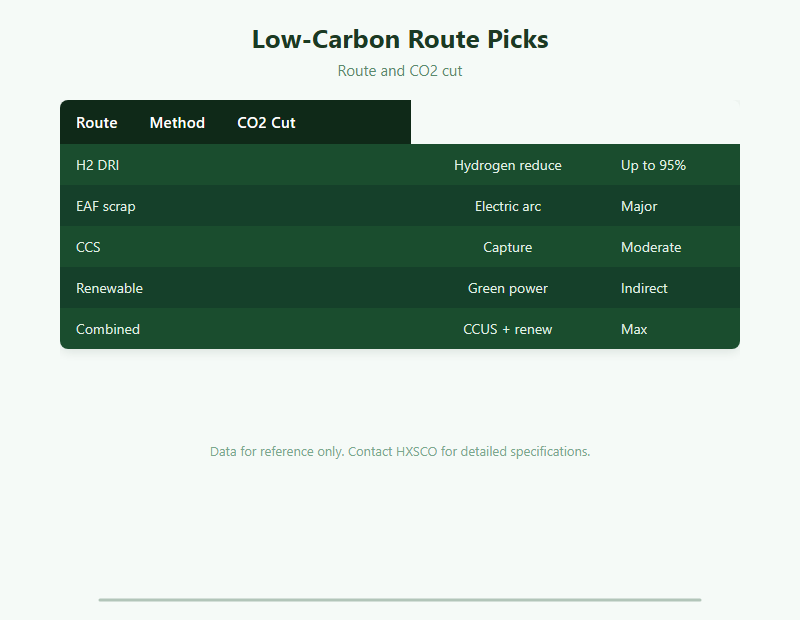
Short answer: Green steel cuts CO2 through hydrogen direct reduction, electric-arc-furnace scrap melting and carbon capture versus the traditional blast-furnace route; buyers should check the certification, the share of low-carbon input and the cost premium before specifying.
At a Glance
Why Green Steel
Decarbonising steel matters for tenders and ESG; the base product is in our Carbon Steel Supplier und Arten von Kohlenstoffstahl, the strength data in our Vergleich der Stärken and the grade families in our Types and Grades of Steel.
Production Routes
Hydrogen DRI, EAF with scrap and CCS each lower emissions by different amounts; the process angle is in our Heat Treatment Guide, corrosion care in our Corrosion Resistance Guide and the long-life option in our Weathering Steel Guide.
Certification and Claims
Look for verified emissions data and a recognised certificate, not just a label; the proof is in our Mill Test Certificate Guide, the standard mapping in our Standards Comparison and tolerances in our Tolerances Guide.
Specifying and Cost
Low-carbon steel carries a premium tied to the route; the stock and packing are in our Export Packing Guide, the finish in our Surface Treatment Guide and the comparison in our Galvanized vs Stainless page.
Get a Quote
Tell HXSCO your requirements and we will respond with a competitive quote and lead time.
Häufig gestellte Fragen
Hydrogen reduction, scrap EAF or carbon capture cut CO2 versus blast furnace.
Hydrogen DRI can cut up to about 95% versus the traditional route.
Yes — via verified emissions data and recognised certificates.
Usually a premium tied to the low-carbon route and volume.
We can specify and source low-carbon grades with the right certificate.
Specify Low-Carbon Steel with HXSCO
HXSCO can supply low-carbon and certified green steel for ESG-driven projects. Send the grade and certification need and we will quote.