


Short answer: Springback is the elastic rebound of a formed part when the bending load is released; it grows with yield strength and elastic modulus ratio, so accurate tooling, overbend and coining are needed to hit the target angle — especially in aluminium, stainless and titanium.
At a Glance
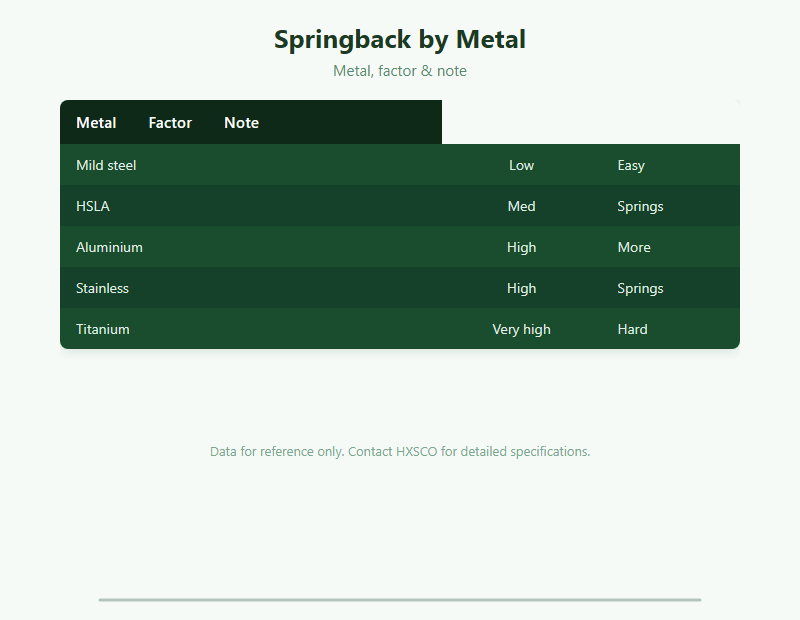
Why Parts Spring Back
Only the elastic portion recovers after unloading; the higher the yield-to-modulus ratio, the more rebound — tying to Yield Strength Vs Tensile Strength ve Metal Formability Guide. It dominates Metal Bending Guide ve Aluminum Temper Designations choices.
Controlling Springback
Overbend the tool, add a coining or bottoming step, or plan Stress Relieving Vs Annealing after forming; relate to Metal Strain Hardening Guide ve Metal Residual Stress Guide. Use Metal Tolerances Fits Guide to set the envelope.
QA & Supply
Check the finished angle against drawing, verify with Metal Ndt Guide for cracks, and document per Mill Test Certificate Guide. HXSCO supplies tempers chosen to minimise springback for your part.
Get a Quote
Tell HXSCO your requirements and we will respond with a competitive quote and lead time.
Sıkça Sorulan Sorular
The elastic rebound of a part to a smaller bend angle when the forming load is released.
High yield-to-modulus metals: titanium, stainless and aluminium spring back more than mild steel.
Overbend the tool, add coining/bottoming, or stress-relieve after forming.
Its lower modulus and high yield ratio give a larger elastic recovery.
HXSCO supplies tempers and grades selected to minimise springback for your forming process.
Source Forming-Grade Metal from HXSCO
HXSCO supplies tempers and grades selected to control springback for your bending and stamping process. Send your drawing and quantity for a quote.