



Short answer: Flux-cored wire runs hotter and faster than solid MIG, with self-shielded types working outdoors and gas-shielded E71T-1 dominating structural work; compare with our MIG Welding Wire Guide and supply in our Welding Wire Supplier.
At a Glance
Why Flux-Cored
FCAW lays more metal per hour and tolerates less-prepared joints, with the process overview in our Metal Welding Guide.
Self-Shielded vs Gas-Shielded
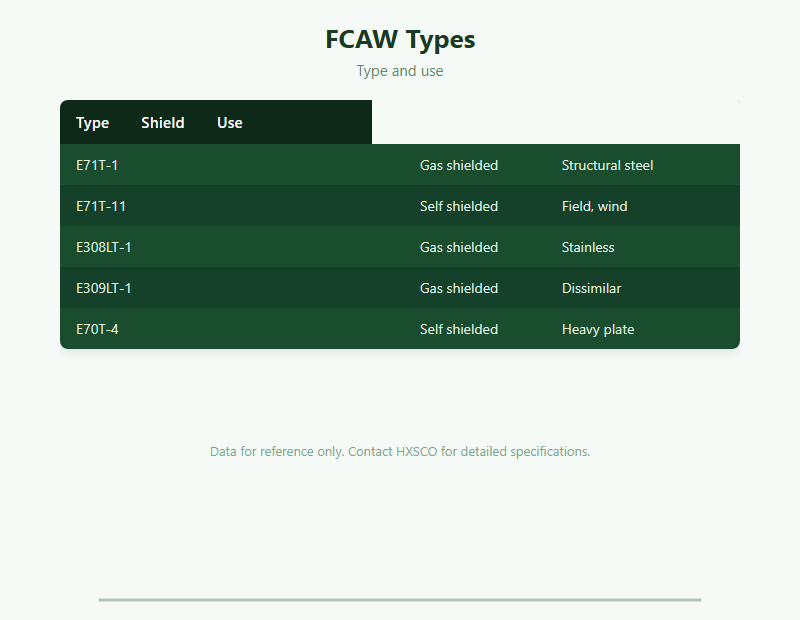
Self-shielded wires need no gas and suit windy field welds, while gas-shielded E71T-1 gives cleaner welds on structural steel, with base grades in our Carbon Steel Supplier.
Stainless and Dissimilar
E308LT-1 and E309LT-1 extend FCAW to stainless and dissimilar joints, with alloy notes in our Stainless Steel Buyers Guide.
Quality Control
Verify slag removal, penetration and MTC per our Quality Inspection Guide and keep documents with our Mill Test Certificate Guide.
Get a Quote
Tell HXSCO your requirements and we will respond with a competitive quote and lead time.
Sıkça Sorulan Sorular
Self for field, gas for clean structural.
The common gas-shielded carbon-steel FCAW wire.
Yes – higher deposition rates.
Yes with E308LT-1 or E309LT-1.
Only gas-shielded types; self-shielded do not.
Get Flux-Cored Wire Quote
HXSCO supplies flux-cored wire E71T-1, E71T-11, E308LT-1 and more with MTC. Send grade, diameter and quantity for a quote.