


Short answer: High-temperature alloys – nickel, cobalt and iron superalloys – keep strength, resist creep and fight oxidation at extreme heat, enabling turbine blades, jet engines, furnace parts and chemical plant; this guide compares the families and their uses and points to sourcing and processing help across our alloy, refractory and heat-treatment guides.
At a Glance
What High-Temperature Alloys Do
They resist creep, oxidation and thermal fatigue, with the property basis in our Metal Strength Comparison и Fatigue Endurance Limit; density context is in our Density Comparison Guide.
Nickel and Cobalt Superalloys
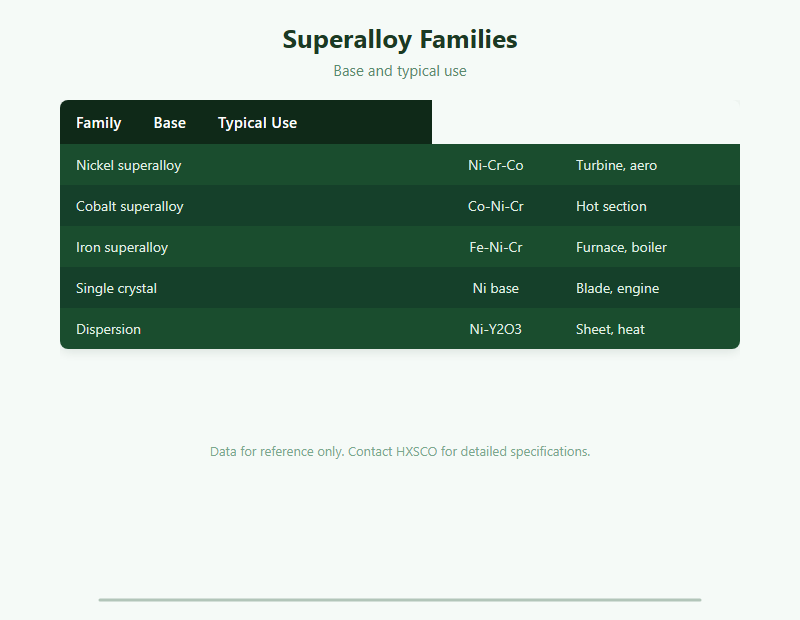
Ni-base leads turbine and engine use while Co-base serves hot sections, with raw metal in our Cobalt Buyers Guide and alloy basis in our Alloy Steel Supplier; processing is in our Heat Treatment Guide.
Where They Are Used
Turbines, engines, furnaces and chemical plant dominate, where our Aerospace Guide и Chemical Processing Guide apply; related metals are in our Refractory Metals Guide.
How to Choose and Buy
Match alloy to temperature and atmosphere and confirm certificate; certification is in our Mill Test Certificate Guide and export packing in our Export Packing Guide; machining is in our Machining Guide.
Get a Quote
Tell HXSCO your requirements and we will respond with a competitive quote and lead time.
Часто задаваемые вопросы
Nickel-base for turbine blades and discs.
Better hot-corrosion resistance in some sections.
A turbine blade cast as one crystal to avoid grain weakness.
Yes – creep resistance is their key advantage.
Request a mill test certificate with chemistry.
Source High-Temperature Alloys
HXSCO supplies nickel, cobalt and iron superalloys and refractory metals. Tell us the alloy, form and quantity for a quote.