


Short answer: Copper is the pure, reddish, non-magnetic base metal; brass is copper with zinc (yellow, easy to machine, used for fittings); bronze is copper with tin (and often phosphorus), giving hardness and wear resistance for bearings and marine parts — tell them apart by colour, density and an XRF reading of zinc versus tin.
At a Glance
Copper, Brass, Bronze — What’s the Difference
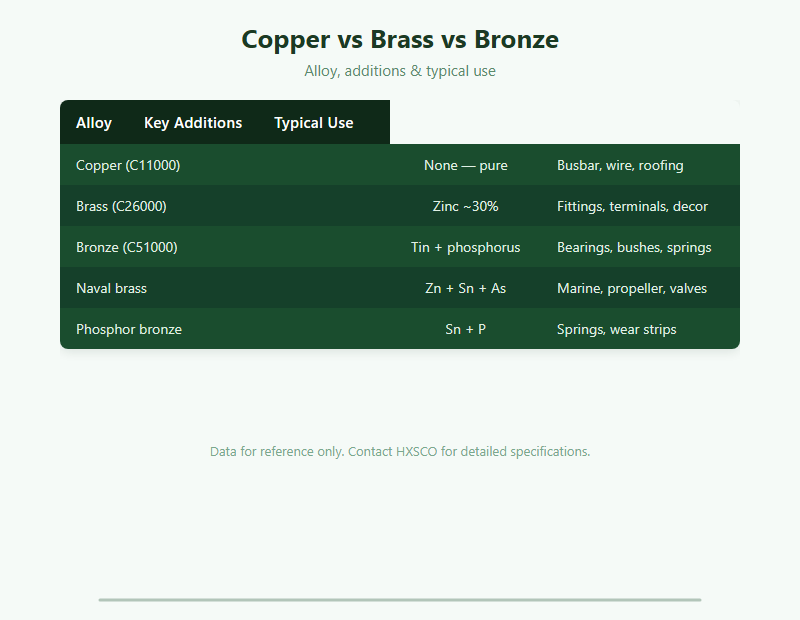
All three share copper’s conductivity and corrosion resistance but behave very differently. Pure copper (C11000) is soft, extremely conductive and the base for busbar and wire; brass adds zinc to make it harder, more machinable and cheaper for fittings and decorative work; bronze adds tin (and often phosphorus) for hardness, low friction and seawater resistance. The direct copper-versus-brass comparison is in Brass Vs Copper Comparison, the wider family is in Copper Alloys Guide, and the raw metal comes from our Copper Supplier programme. Magnet and XRF quickly separate them: all are non-magnetic, but XRF shows zinc in brass and tin in bronze.
Brass Families
Brass splits by zinc content and additions: cartridge and decorative brasses around 30% zinc (C26000, C27000) machine beautifully; leaded brasses improve chip-breaking for high-speed turning; and naval/admiralty brasses add tin and arsenic for dezincification resistance in seawater. Grade detail and applications are in Brass Grades Guide, and the springy tin-bronzes such as Phosphor Bronze Guide sit at the wear-resistant end of the family. For bearings and bushes you generally want bronze, not brass, because bronze’s lower friction and embedded-particle tolerance suit rotating surfaces.
Bronze Families and Sourcing
Bronze covers tin bronzes (C90500, C51000), phosphor bronzes for springs and wear strips, aluminium bronzes for strength and corrosion, and silicon bronzes for welding and marine hardware. The cast and wrought options are covered under our Bronze Supplier line, and alloy selection follows the same certification discipline as every other programme — see Mill Test Certificate Guide. When a part needs both corrosion resistance and low friction in a marine or bearing duty, bronze is normally the right call, with brass reserved for fittings, terminals and decorative trim where strength and machinability matter more than wear life.
Get a Quote
Tell HXSCO your requirements and we will respond with a competitive quote and lead time.
Часто задаваемые вопросы
Copper is the pure base metal; brass is copper plus zinc (yellow, machinable, for fittings); bronze is copper plus tin (harder, low-friction, for bearings and marine parts).
Brass is yellower from its zinc content and machines easily; bronze is reddish-brown with tin and is harder and more wear-resistant. An XRF reading confirms zinc in brass and tin in bronze.
Brass is generally preferred for fittings, terminals and decorative trim because it machines well and costs less; bronze is chosen where low friction, wear resistance or seawater service matter.
Yes. HXSCO supplies pure copper plus brass and bronze in plate, bar, rod, tube and cast form with mill certificates and the specific alloy you specify.
Source Copper, Brass & Bronze from HXSCO
HXSCO supplies copper, brass and bronze in plate, bar, rod and tube with mill certificates and the exact alloy you need. Send your specification for a quote.