


Short answer: Grain size — counted by ASTM E112 — sets much of a metal’s strength, toughness and formability: finer grains are stronger and tougher, coarser grains form and machine more easily. Controlling it is a core metallurgy lever.
At a Glance
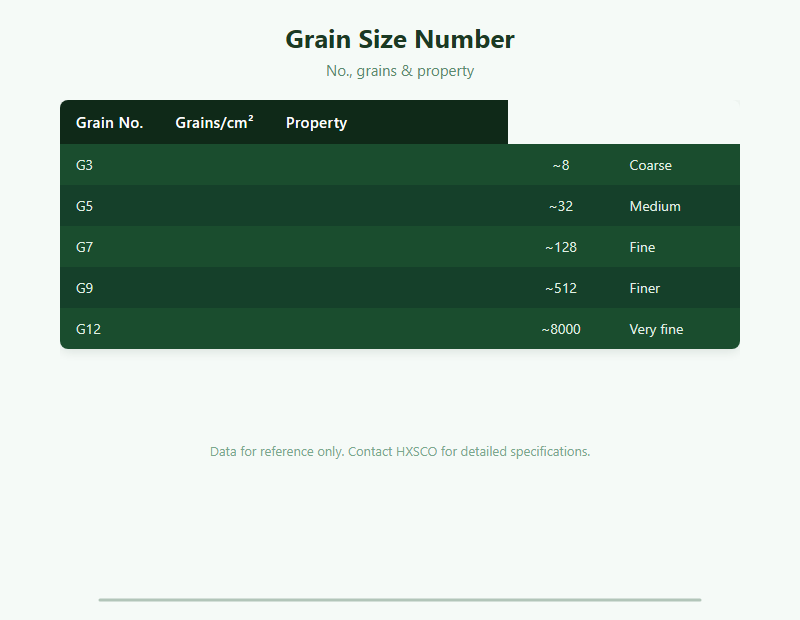
Counting Grains
ASTM grain size number rises as grains get finer (more grains per area); read it under Metal Metallography Guide and link to Grain Structure Metals e Metal Recrystallization Temperature Guide.
Property Trade-offs
Fine grains raise strength via Metal Strain Hardening Guide and improve toughness; coarse grains favour Metal Machinability Guide and formability. Tie to Metal Creep Guide.
QA & Supply
Document grain practice per Mill Test Certificate Guide and protect via How To Prevent Metal Rust. HXSCO supplies grades by the grain structure you need.
Get a Quote
Tell HXSCO your requirements and we will respond with a competitive quote and lead time.
Perguntas frequentes
A standard (E112) numbering the grains per unit area of a metal.
Yes — Hall-Petch strengthening raises yield with finer grains.
For machinability and deep forming where toughness is less critical.
By rolling/forging reduction, recrystallization and cooling rate.
HXSCO supplies grades specified to the grain structure your process needs.
Source Grain-Controlled Metal from HXSCO
HXSCO supplies metal graded to the grain size your strength, toughness and formability targets need. Send your spec and quantity for a quote.