


Short answer: Battery enclosures use aluminum and steel for the case, copper or aluminum busbar for current and brazed aluminum for cooling, specified for thermal runaway resistance, weight, EMI shielding and crash, with coatings protecting the pack for its life.
At a Glance
Case Material and Weight
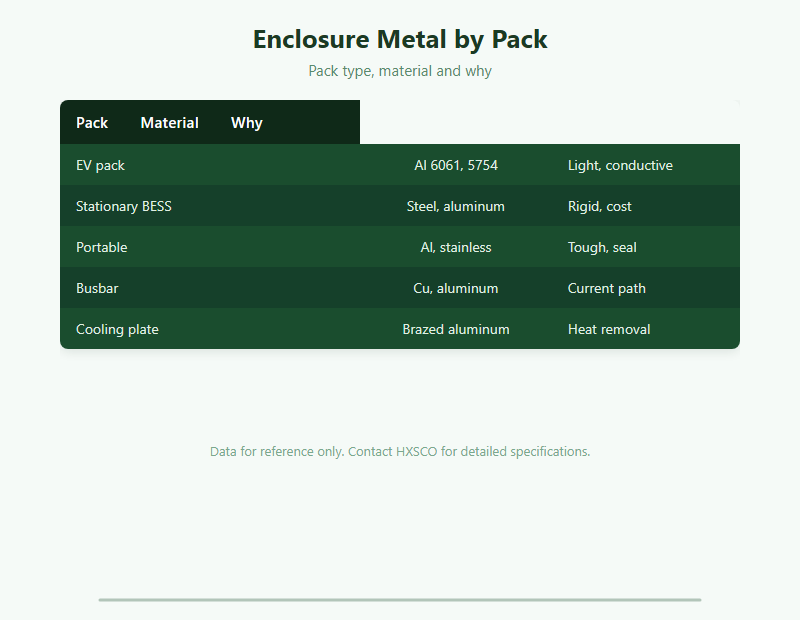
EV packs favor aluminum 6061 or 5754 for low weight and good conduction, while stationary BESS uses steel or aluminum for rigidity; the energy context is in our Battery Energy Storage Guide and the power angle in our Power Generation Guide.
Busbar and Current Path
Busbar moves charge between cells, with copper versus aluminum in our Busbar Copper vs Aluminum guide and the charging link in our EV Charging Stations Guide; fabrication is in our Extrusion Process Guide.
Thermal and EMI Protection
Cooling plates braze aluminum, and enclosures add coated or anodized finish for EMI and durability, with finishes in our Finishing Coating Guide and the coating choice in our Galvanized vs Stainless Guide.
Specifying and Sourcing
Buyers set crush, thermal and IP targets, then confirm with our Mill Test Certificate Guide and pack per our Export Packing Guide.
Get a Quote
Tell HXSCO your requirements and we will respond with a competitive quote and lead time.
Veelgestelde vragen
Mostly aluminum 6061 or 5754 for low weight and good heat spread.
Copper for compact high-current links, aluminum where weight and cost dominate.
Aluminum conducts heat well and brazes into leak-tight cooling channels.
Coated, anodized or painted finish plus gaskets for EMI and IP rating.
Yes – aluminum, steel and busbar stock with certificate for pack builders.
Equip Battery Packs with HXSCO Metal
HXSCO supplies aluminum, steel and busbar metal for EV and stationary battery enclosures with the finish and tolerance your design needs. Send your BOM for a quote.