


Short answer: Bimetallic corrosion happens when two dissimilar metals touch in an electrolyte and the more active one corrodes faster; the fix is to insulate the joint, apply coating or pick a closer-matched pair, with the risk highest for steel-copper and aluminum-steel in wet or marine service.
At a Glance
What Drives Galvanic Corrosion
The effect follows the galvanic series, where the more active metal sacrifices itself to the noble one; the science is in our Corrosion Resistance Guide and the material choice in our Galvanized vs Stainless Guide.
Common Risk Pairs
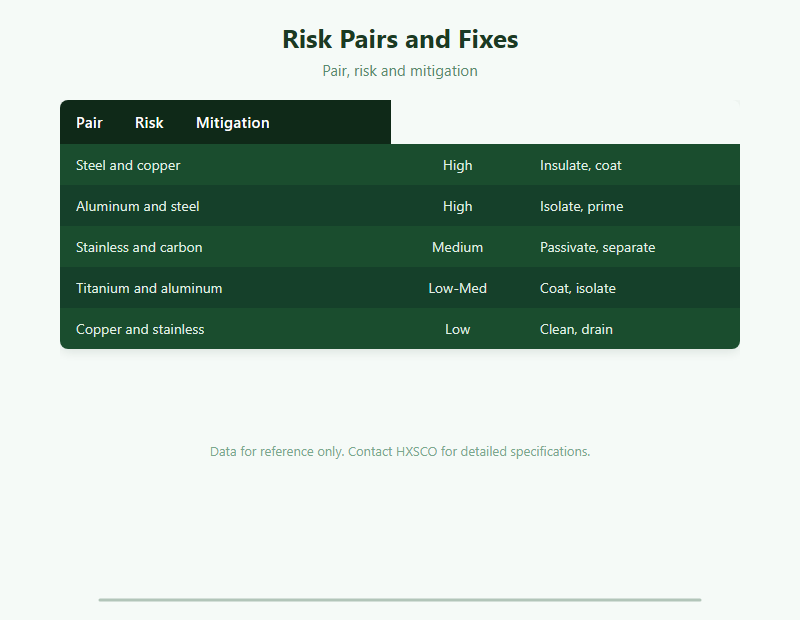
Steel next to copper and aluminum next to steel are the classic high-risk joins, while stainless with titanium is mild; compare the pairs in our Copper vs Stainless, Aluminum vs Stainless en Titanium vs Stainless guides, and busbar notes in our Busbar Copper vs Aluminum Guide.
Prevention and Design
Break the electrolyte path with insulation washers and coatings, or select matched metals and add cathodic protection; the plan is in our Corrosion Protection Guide, Finishing Coating Guide en Surface Treatment Guide.
Where It Matters Most
Marine, chemical and buried piping see the worst attacks; the duty is in our Marine and Offshore Guide, Chemical Processing Guide en Piping and Pipeline Guide.
Get a Quote
Tell HXSCO your requirements and we will respond with a competitive quote and lead time.
Veelgestelde vragen
Corrosion of the more active of two joined metals when they sit in an electrolyte, driven by the galvanic series.
Steel with copper and aluminum with steel are high-risk in wet or salt service.
Insulate the joint, coat both metals, or choose a closer-matched pair plus cathodic protection.
Risk is moderate; passivate and separate the surfaces to limit attack.
Coating helps but must stay intact; pair it with insulation for long life.
Avoid Galvanic Failures with HXSCO
HXSCO helps you pick metals and coatings that resist bimetallic corrosion in marine, chemical and structural service. Send your joint design for advice and a quote.