


Short answer: Zinc (7.14 g/cm³) is denser but self-heals via its oxide and is the king of anti-corrosion coatings; aluminum (2.70 g/cm³) is far lighter, stronger and more structural. Use zinc to protect steel, aluminum to build with.
At a Glance
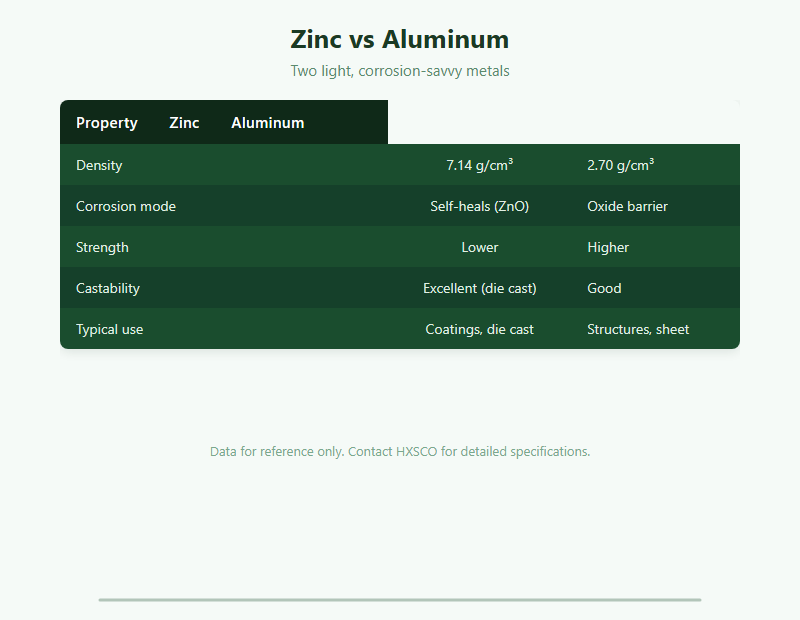
Fysische eigenschappen
Aluminum is about 2.6× lighter than zinc and much stronger, so it is a structural material. Zinc is softer, lower-strength and mainly used as a coating metal or for die castings. Aluminum Vs Stainless Steel 2 compares aluminum with stainless for structure.
Corrosion Behaviour
Zinc’s corrosion products self-seal and sacrificially protect any exposed steel — the basis of galvanizing. Aluminum forms a tight oxide barrier that stops further attack. Both are excellent, but they solve different problems. See Metal Corrosion Resistance Guide.
Typische toepassingen
Zinc: galvanizing, die-cast components, batteries. Aluminum: structures, sheet, extrusions, transport. When steel needs protection, compare Galvanized Vs Stainless Steel for the coating route.
Get a Quote
Tell HXSCO your requirements and we will respond with a competitive quote and lead time.
Veelgestelde vragen
No. Aluminum has a much higher strength-to-weight ratio and is used structurally; zinc is relatively soft and weak, used for coatings and small die castings.
Both resist atmosphere well. Zinc sacrificially protects steel; aluminum forms a stable barrier. In open air both last decades; in alkaline or acidic conditions the ranking shifts.
Direct contact can cause galvanic corrosion of the less noble metal (aluminum) in a conductive electrolyte. Isolate them or use a compatible joint design.
Because zinc is more anodic than steel, so it corrodes first and protects the steel even at scratches — a cheap, durable, self-healing system.
Source Zinc-Coated or Aluminum Stock
HXSCO supplies galvanized steel and aluminum sheet, coil and extrusions. Tell us your application for a material recommendation and quote.