


Short answer: Thermal spray deposits molten or semi-molten metal/ceramic onto a surface to build wear, corrosion or thermal resistance without heating the part — from zinc/aluminum arc spray for structures to HVOF tungsten carbide for extreme wear.
At a Glance
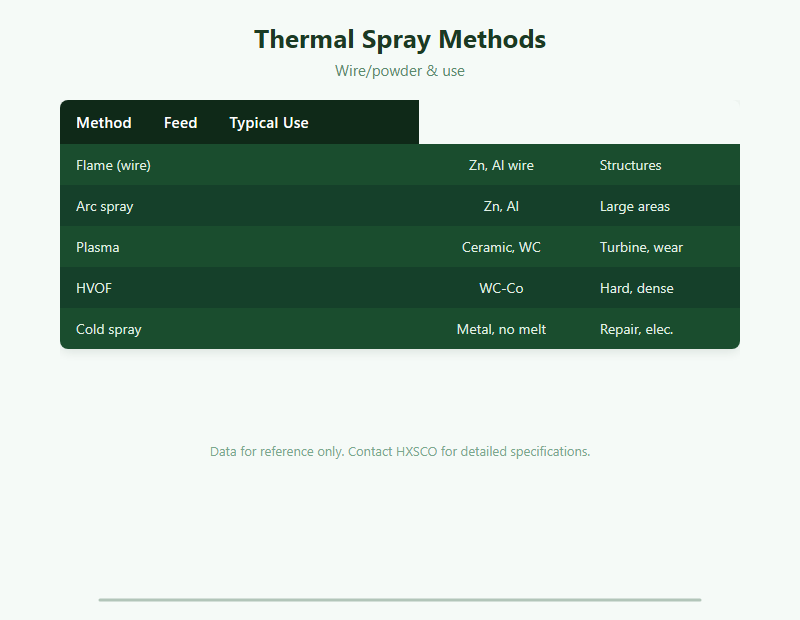
How Thermal Spray Works
A gun propels feedstock (wire or powder) that melts and impacts the substrate as a bonded coating. It complements Hot Dip Galvanizing Process en Zinc Plating Vs Galvanizing for corrosion; finishing in Metal Surface Treatment Guide.
Methods & Materials
Arc/flame spray zinc-aluminum for structures; plasma for ceramics; HVOF for dense tungsten-carbide wear coats; cold spray for repair without heat. Corrosion context in Galvanic Corrosion Guide.
Toepassingen
Bridges, ship decks, turbine blades, rolls, pistons and restored shafts. Quality and thickness verified per Mill Test Certificate Guide practice.
Get a Quote
Tell HXSCO your requirements and we will respond with a competitive quote and lead time.
Veelgestelde vragen
Thermal spray deposits molten metal or ceramic onto a surface to add wear, corrosion or thermal resistance without heating the whole part.
Zinc or aluminum arc/flame spray is standard for structural corrosion protection, comparable to galvanizing for large areas.
HVOF (High-Velocity Oxygen Fuel) sprays dense tungsten-carbide coatings for extreme wear and erosion resistance.
HXSCO supplies the zinc, aluminum and steel substrates and can advise on thermal-spray coating routes.
Coat Metal with HXSCO
HXSCO supplies zinc, aluminum and steel substrates for thermal-spray coatings and advises on routes. Send your application for a quote.