


Short answer: Alloy steel is carbon steel strengthened with deliberate additions of chromium, molybdenum, nickel, and vanadium to gain hardness, toughness, and wear resistance. HXSCO supplies 4140, 4130, 4340, 8620, and similar grades in plate, bar, tube, and forging stock, with mill-test certificates for automotive, oil & gas, and heavy-machinery applications.
At a Glance
What Is Alloy Steel?
Alloy steel starts as carbon steel and adds alloying elements – most often chromium, molybdenum, nickel, and vanadium – to deliver properties ordinary carbon steel cannot. The result is higher strength, better hardenability, and improved toughness at temperature, which is why it underpins drivetrain, pressure, and structural components.
The Grades Buyers Specify
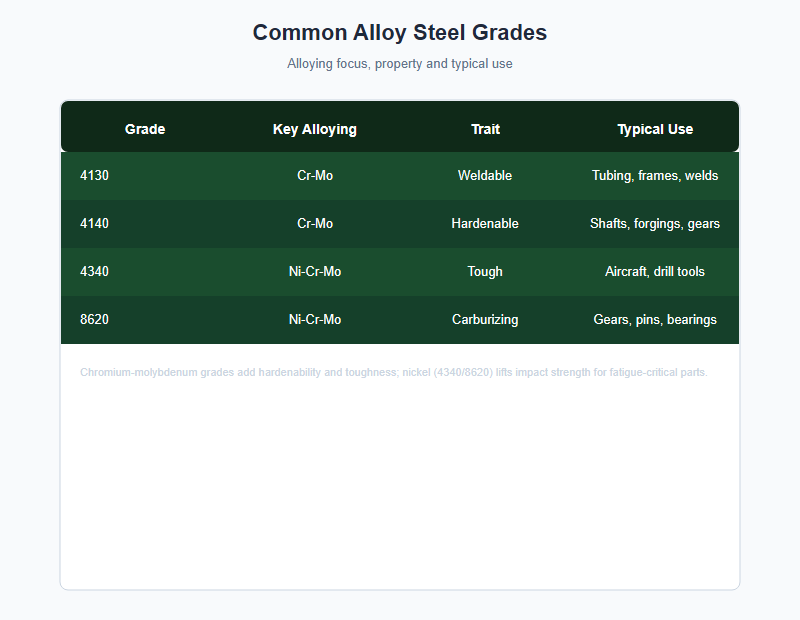
The chart groups the workhorses. 4140 en 4130 are chromium-molybdenum grades for shafts, forgings, and tubing. 4340 adds nickel for extreme toughness in aircraft and gear duty. 8620 is a carburizing grade for wear surfaces. Compare with our carbon steel range.
Supply Forms
- Bar & rod: rounds and flats for machining and forging.
- Plate & sheet: for structural and pressure parts.
- Tube & pipe: mechanical and pressure service.
- Forging & bloom: for high-duty components.
Typische toepassingen
Alloy steel drives automotive axles, gears, and crankshafts; builds oil & gas drill tools and pressure vessels; and forms heavy-machinery spindles, dies, and fasteners. Where fatigue, impact, and wear dominate, alloy steel is the default.
Sourcing Alloy Steel from HXSCO
HXSCO stocks and sources alloy steel across AISI/SAE and EN grades. Tell us the grade, form, dimensions, and quantity, and we will quote with heat-treatment and full mill-test certification.
Veelgestelde vragen
Carbon steel plus deliberate alloying elements such as chromium, molybdenum, nickel, and vanadium to improve strength, toughness, and hardenability.
4140 and 4130 (chromium-molybdenum), 4340 (nickel-chromium-molybdenum), and 8620 (carburizing) are among the grades specified most often.
Yes – with the same carbon level, alloy additions give higher strength, toughness, and hardenability, especially in thicker sections.
Bar, rod, plate, sheet, tube, pipe, and forging stock across AISI/SAE and EN grades, with certification.
State the system and grade (e.g. ASTM A29 4140, EN 19, SAE 4340); see our standards guide for cross-references.
Ready to source Alloy Steel from HXSCO?
Send us the grade, form, dimensions, quantity, and any certification or test requirements. HXSCO replies with a competitive quote, lead time, and mill-test options.
Request a Quote