



Short answer: The galvanic series ranks metals from active magnesium and zinc through steel and stainless to noble copper and titanium, so when two far-apart metals touch in an electrolyte the active one corrodes as the anode; designers avoid this with insulating barriers, similar metals, sacrificial zinc anodes or protective coatings, and specify compatible pairs when sourcing mixed-metal assemblies.
At a Glance
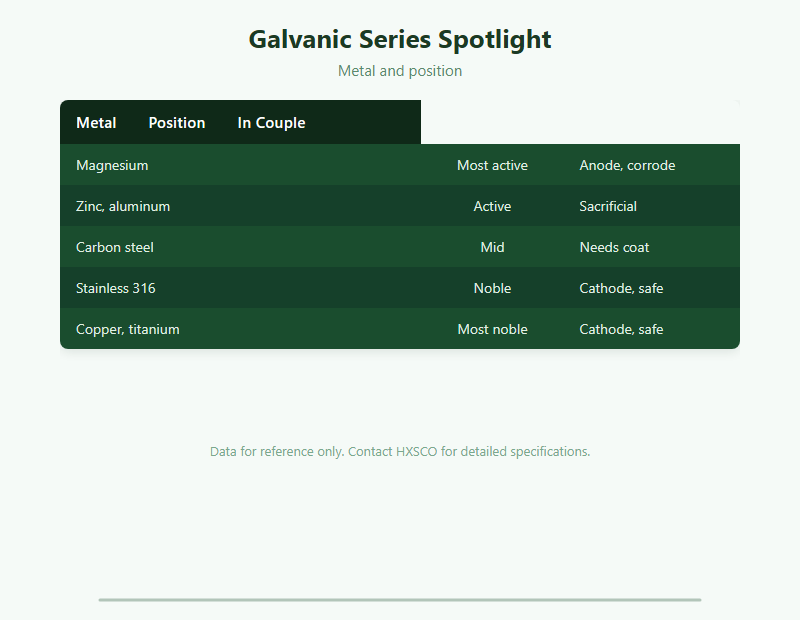
What the Series Means
Potential difference drives attack, with the basis in our Corrosion Resistance Guide and protection in our Corrosion Protection Guide; joint risk is in our Bimetallic Corrosion Guide.
Common Metal Pairs
Steel with stainless or copper is risky and steel with zinc is protected, with the stainless basis in our Stainless Steel Supplier, copper in our Copper Supplier and aluminum in our Aluminium Supplier; the trade-off is in our Galvanized vs Stainless Steel.
Designing It Out
Insulation, coatings and anodes break the circuit, with finish in our Surface Treatment Guide and CUI context in our Corrosion Under Insulation Guide; passivation is in our Passivation Guide.
Quality and Sourcing
Assemblies are checked by inspection, with methods in our Quality Inspection Guide; buyers confirm grade via our Mill Test Certificate Guide and pack per our Export Packing Guide.
Get a Quote
Tell HXSCO your requirements and we will respond with a competitive quote and lead time.
Pertanyaan yang Sering Diajukan
A ranking of metals by corrosion potential in electrolyte.
The more active (anode) metal corrodes faster.
Yes – steel is active and corrodes near the join.
Insulate, coat, or add a sacrificial zinc anode.
Specify compatible pairs and coatings on the order.
Source Compatible Metal with HXSCO
HXSCO advises and supplies compatible metal pairs with coatings and isolation for mixed assemblies. Send the service for a quote.