



Short answer: Heat exchangers pick tube and plate against the fluid: 316L for fresh water, titanium for seawater, 2205 duplex for brine, 904L for aggressive acid and copper alloys for refrigerant duty, with the choice balancing conductivity, corrosion and cost.
At a Glance
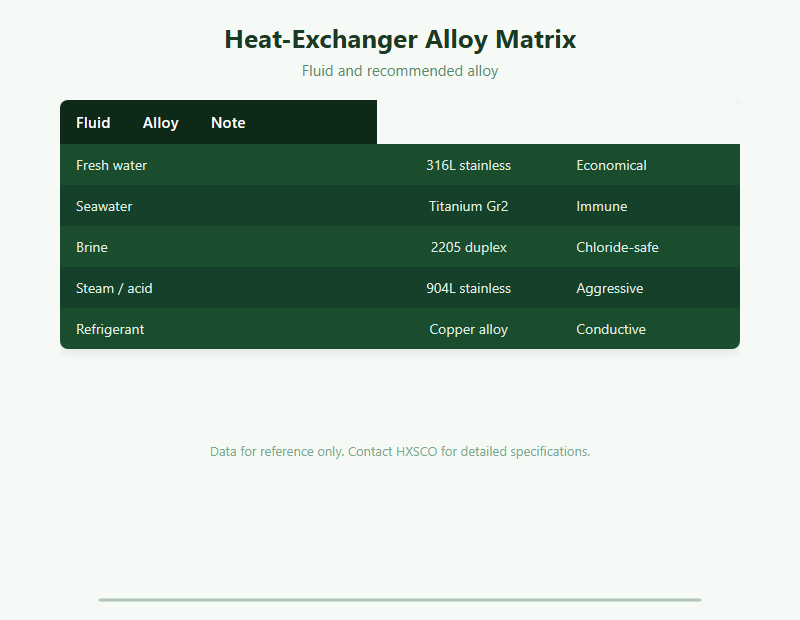
Match Metal to Fluid
The cooling fluid decides the alloy, not the duty, so define fresh, seawater or acid first; the baseline is in our 316 vs 316L dan Seawater Corrosion Guide.
Stainless and Duplex Tubes
316L serves fresh water and 2205 duplex serves brine and chloride, while 904L takes aggressive acid; compare in our Duplex 2205 Guide and the stainless view in our Stainless Steel Supplier range.
Copper and Titanium
Copper alloys conduct best for refrigerant and HVAC duty, while titanium is immune in seawater; the base metals are in our Copper Supplier dan Titanium Grades Guide, with corrosion care in our Corrosion Resistance Guide.
Fouling and Cleanability
Surface finish and material decide fouling and cleanability, so specify Ra and passivation where needed; our Surface Treatment Guide dan Passivation Guide cover prep.
Specifying for Reliability
Buyers should specify fluid, temperature and velocity, then let the supplier propose the leanest qualified alloy; our How to Choose a Metal Supplier dan Nickel Alloy Supplier help frame the RFQ.
Get a Quote
Tell HXSCO your requirements and we will respond with a competitive quote and lead time.
Pertanyaan yang Sering Diajukan
316L stainless for an economical, cleanable tube.
Titanium Grade 2 for immunity, 2205 duplex where cost matters.
904L stainless or a nickel alloy for the hardest services.
Yes for refrigerant and HVAC where conductivity leads.
We supply stainless, copper, titanium and duplex; send the fluid.
Source Heat-Exchanger Metal from HXSCO
HXSCO supplies stainless, copper, titanium and duplex tube for heat exchangers with mill certificate. Describe your fluid and we will propose the alloy.