


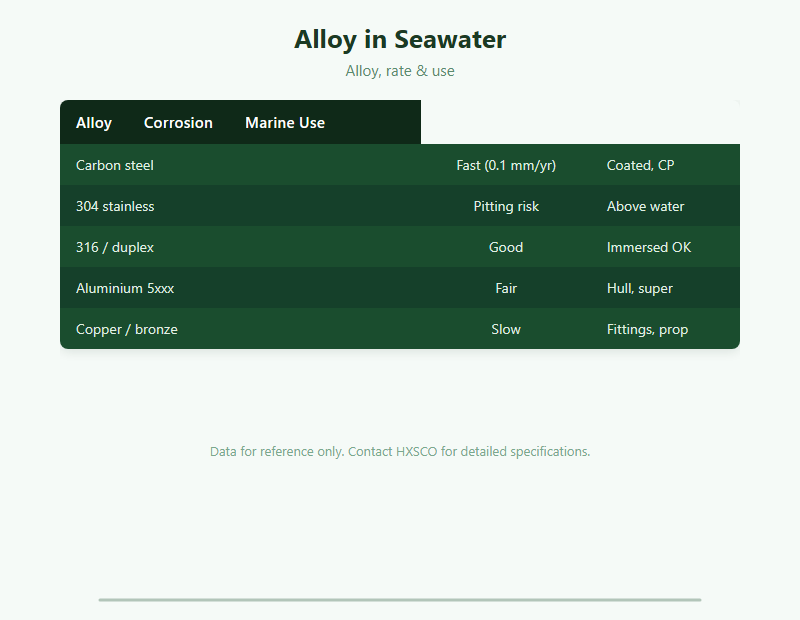
Short answer: Seawater is aggressive — carbon steel corrodes fast and must be coated or cathodically protected, 304 stainless pits in chlorides while 316 and duplex resist immersion, and aluminium and copper alloys serve specific marine roles; the right alloy plus coating and cathodic protection decides service life.
At a Glance
Why Seawater Is Aggressive
Warm, aerated, chloride-rich seawater drives both uniform loss and localised attack. Carbon steel needs paint plus cathodic protection; stainless faces Pitting Corrosion Stainless Steel dan Crevice Corrosion Stainless Steel from chlorides. The electrochemistry is the same as Galvanic Corrosion Guide and the ranking in Galvanic Series Guide.
Choosing Marine Alloys
316 and duplex stainless (Duplex Stainless Supplier) resist immersion; 304 is limited to above-water and splash zones; 5xxx aluminium suits hulls and superstructure; copper and bronze serve fittings and propellers. Grade detail is in Penjelasan Nilai Baja Tahan Karat dan Stainless Steel 316 Properties, and the supply side in Copper Supplier. Avoid wide galvanic gaps or insulate them.
Protection & Inspection
Coat carbon steel, apply impressed-current or sacrificial-anode Cathodic Protection Guide, use inhibitors from Metal Corrosion Inhibitor Guide, and keep crevices drained. Baseline the alloy with How To Prevent Metal Rust and verify by Metal Corrosion Testing Guide; we certificate chemistry and PREN per Mill Test Certificate Guide.
Get a Quote
Tell HXSCO your requirements and we will respond with a competitive quote and lead time.
Pertanyaan yang Sering Diajukan
316 or duplex stainless, with 5xxx aluminium for hulls and copper alloys for fittings; carbon steel needs coating plus cathodic protection.
Chlorides break its passive film and cause pitting and crevice attack, so 304 is limited to above-water marine zones, not immersion.
Coat it and add cathodic protection (sacrificial zinc anode or impressed current), plus crevice drainage and periodic inspection.
5xxx aluminium is fair in seawater but can suffer galvanic attack if coupled to steel or copper without insulation — keep couples close in the series.
HXSCO supplies 316/duplex stainless, marine aluminium and copper alloys with PREN and mill certificates for seawater service.
Source Marine-Grade Metal from HXSCO
HXSCO supplies 316/duplex stainless, marine aluminium and copper alloys with PREN and mill certificates for seawater duty. Send your service and quantity for a quote.