


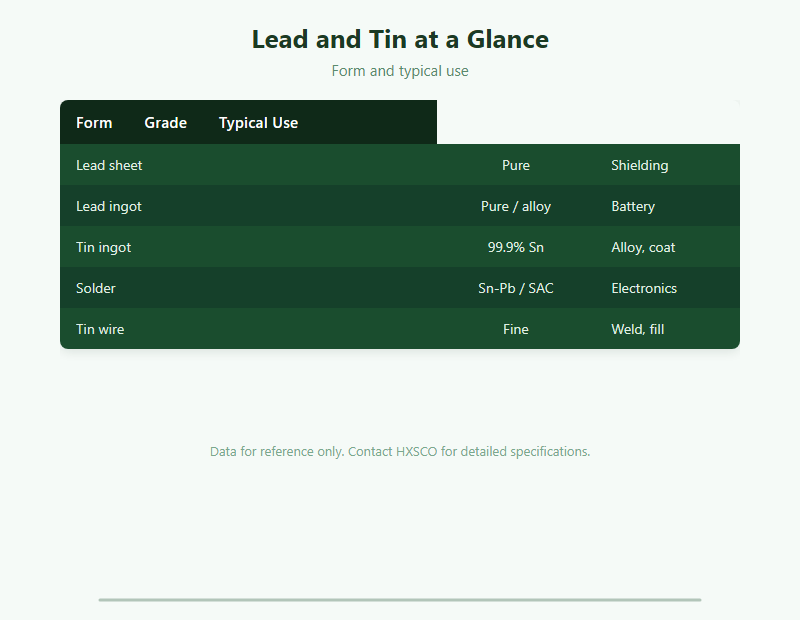
Short answer: This lead and tin guide explains that pure lead serves shielding and batteries, tin serves alloying and coating, and solder serves electronics joining, with selection driven by density, solderability and shielding needs; buyers should confirm grade, form and certificate, and match to battery, radiation or electronics use with our lead, tin and electronics knowledge.
At a Glance
Lead and Tin Grades
Pure lead and tin plus solders cover most needs, with the basis in our Lead Supplier dan Tin Supplier; electronics context is in our Electronics Guide.
Forms and Joining
Sheet, ingot and wire cover most needs, with joining in our Machining Guide and cutting in our Cutting Processes Guide; finish is in our Surface Treatment Guide.
Where Lead and Tin Are Used
Batteries, shielding and electronics dominate, where our Semiconductor Equipment Guide dan Chemical Processing Guide apply; density context is in our Density Comparison Guide.
How to Buy Well
Confirm grade, form and certificate, with guidance in our Mill Test Certificate Guide and packing in our Export Packing Guide; alloy options are in our Alloy Steel Supplier.
Get a Quote
Tell HXSCO your requirements and we will respond with a competitive quote and lead time.
Pertanyaan yang Sering Diajukan
Batteries and radiation shielding.
Solder, coating and alloying.
Yes – SAC lead-free solder alloys.
Yes – high density blocks radiation well.
Packed, tagged and moisture-safe with certificate.
Source Lead and Tin from HXSCO
HXSCO supplies lead and tin sheet, ingot, wire and solder in certified grades. Send grade, form and quantity for a competitive quote.