



Short answer: Die casting forces molten metal into a reusable steel die under high pressure, producing accurate, repeatable parts; hot-chamber suits zinc and magnesium, cold-chamber suits aluminum and copper – supply is on our Die Casting Supplier page.
At a Glance
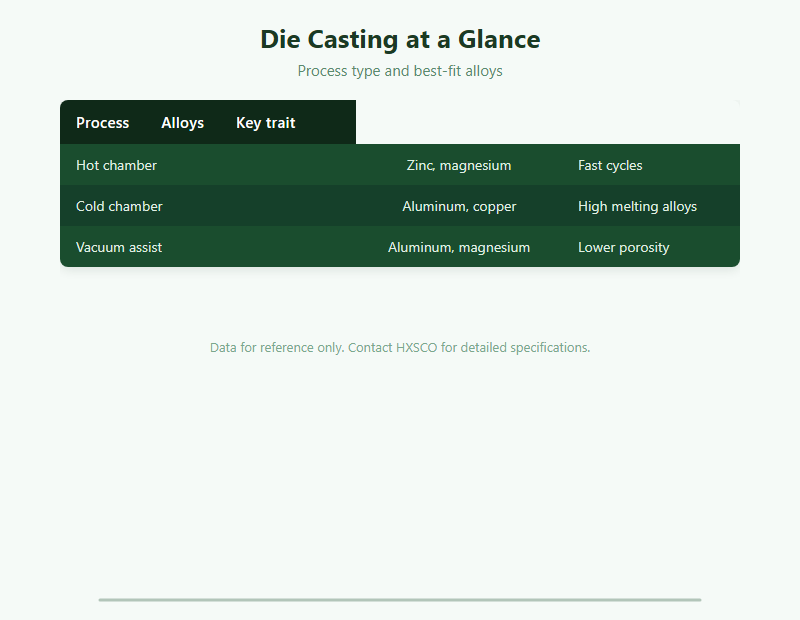
How High-Pressure Die Casting Works
Metal is injected into a hardened steel die at high speed and pressure, then solidifies and is ejected; the broader casting context is in our Metal Casting Guide.
Hot-Chamber vs Cold-Chamber
Hot-chamber machines keep a bath of low-melting metal and inject directly; cold-chamber machines ladle each shot for high-melting alloys; see our Hot-Chamber Guide dan Cold-Chamber Guide.
Alloys Used in Die Casting
Zinc Zamak and ZA, aluminum A380 and ADC12, magnesium AZ91D and copper alloys dominate; selection is covered in our Alloys Guide.
Advantages and Limitations
Die casting gives tight tolerances, thin walls and excellent repeatability at high volume, but tooling cost is high and porosity must be managed; compare routes in our Die vs Sand Casting Guide dan Cast vs Forged Guide.
Defects and Quality Control
Gas porosity, shrinkage and cold shuts are the main risks; detection is in our Defects Guide dan Inspection Guide.
Where Die Castings Are Used
Automotive, electronics, appliances and industrial hardware rely on die castings; the automotive view is in our Automotive Guide and finishing in our Finishing Guide.
Get a Quote
Tell HXSCO your requirements and we will respond with a competitive quote and lead time.
Pertanyaan yang Sering Diajukan
Injecting molten metal into a reusable steel die under high pressure.
Hot chamber generally has faster cycles.
Yes – tight tolerances and good surface finish.
Yes – secondary machining is common.
See our die casting supplier page.
Get a Die Casting Quote
HXSCO supplies die castings in aluminum, zinc, magnesium and copper with tooling and finishing. Send your drawing and volume for a competitive quote.