


Short answer: Spark erosion — die-sinking electrical discharge machining — burns complex 3D cavities into hardened metal using a shaped electrode and controlled sparks, with no cutting force and no tool wear on the part. It is the route to moulds, dies and intricate features in tool steel, carbide and tungsten that would be impossible or slow to mill.
At a Glance
How Die-Sinking Works
A shaped electrode erodes the workpiece in dielectric; relate to Metal Edm Guide, Metal Machinability Guide et Metal Grain Size Guide. Hard stock from Tool Steel Supplier et Tungsten Supplier is ideal.
Process Selection
Pick die-sinking vs wire by geometry; inspect by Metal Ndt Guide and verify size per Mill Test Certificate Guide. Wear relates to Metal Wear Mechanisms Guide.
QA & Supply
Protect finished cavities via How To Prevent Metal Rust. HXSCO supplies EDM-friendly grades to your drawing.
Get a Quote
Tell HXSCO your requirements and we will respond with a competitive quote and lead time.
Questions fréquemment posées
Die-sinking EDM that burns 3D cavities with a shaped electrode.
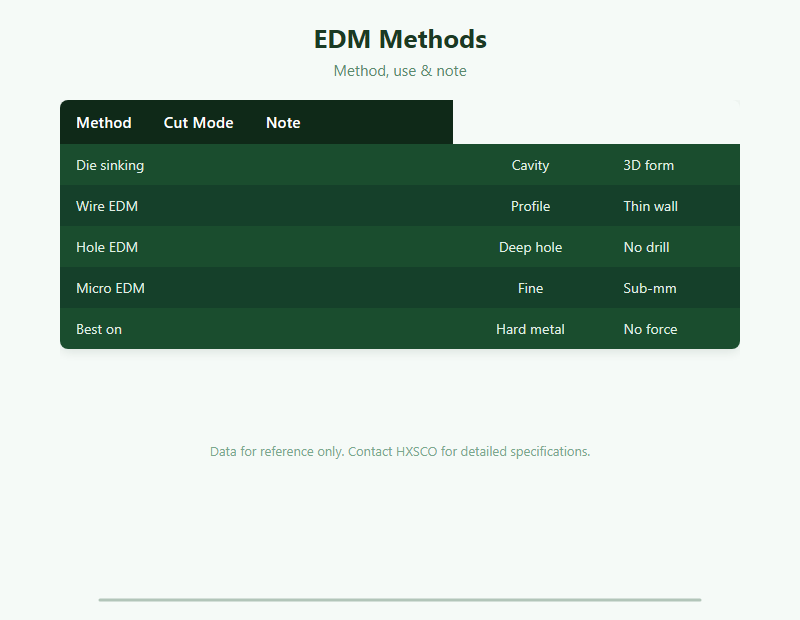
Wire cuts thin profiles; die-sinking forms 3D cavities.
Any conductive metal — hardened steel, carbide, tungsten.
No — no cutting force, so thin and hard parts are safe.
HXSCO supplies tool steel and tungsten suited to spark erosion.
Source EDM-Friendly Metal from HXSCO
HXSCO supplies tool steel, carbide and tungsten grades suited to die-sinking and wire EDM. Send your grade and quantity for a quote.