


Short answer: Porosity is the network of gas and shrinkage voids trapped inside castings and welds; it weakens the section, leaks under pressure and ruins pressure-tight parts, so it is prevented by melting, gating and welding discipline and found via NDT.
At a Glance
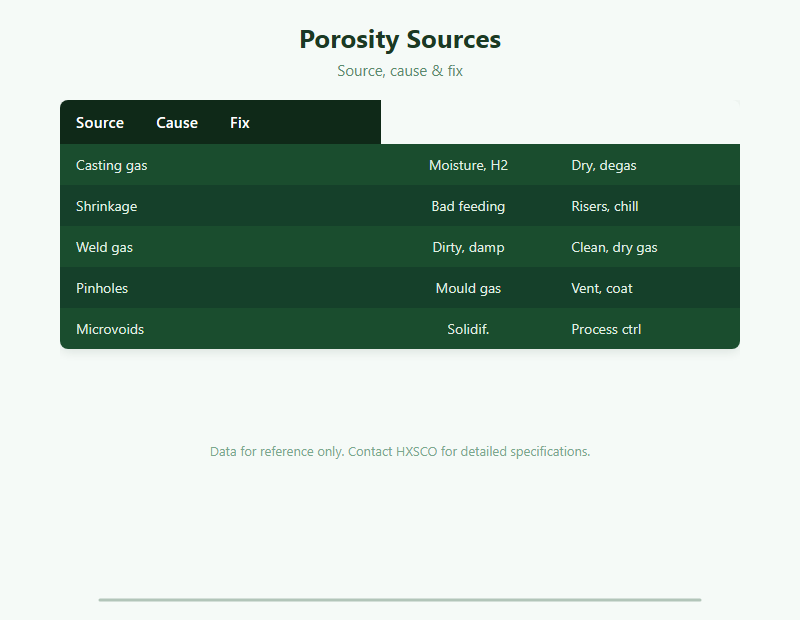
Types of Porosity
Gas porosity comes from dissolved hydrogen/moisture; shrinkage porosity from poor feeding. Both appear in Weld Defects Guide et Aluminum Casting Defects Guide, and reduce Yield Strength Vs Tensile Strength and pressure integrity.
Preventing Porosity
Dry flux and degas melts (Casting Supplier), design risers/chills, keep welds clean and dry (Comment souder l'aluminium, Metal Degreasing Guide), and control solidification. Relate to Metal Formability Guide only indirectly.
Detection & Supply
Find porosity by radiography/UT via Metal Ndt Guide, quantify per Mill Test Certificate Guide, and read failures in Metal Failure Analysis Guide. HXSCO supplies low-porosity cast and welded parts with NDT records.
Get a Quote
Tell HXSCO your requirements and we will respond with a competitive quote and lead time.
Questions fréquemment posées
Gas or shrinkage voids trapped inside a casting or weld, weakening the section and causing leaks.
Moisture, dirty base metal, damp shielding gas and poor technique entrain gas.
Dry flux, degas the melt, good gating/risers and controlled solidification.
Radiography, ultrasonic testing and pressure testing — part of NDT.
HXSCO supplies cast and welded parts with NDT porosity records on request.
Source Sound Metal from HXSCO
HXSCO supplies low-porosity cast and welded components with NDT porosity records. Send your specification and quantity for a quote.