


Short answer: Defense programs use armor steel and titanium for protection, high-strength aluminum and alloy steel for structure and forgings, and certified fasteners, all specified to ballistic, weight and full-traceability requirements.
At a Glance
Armor and Protection
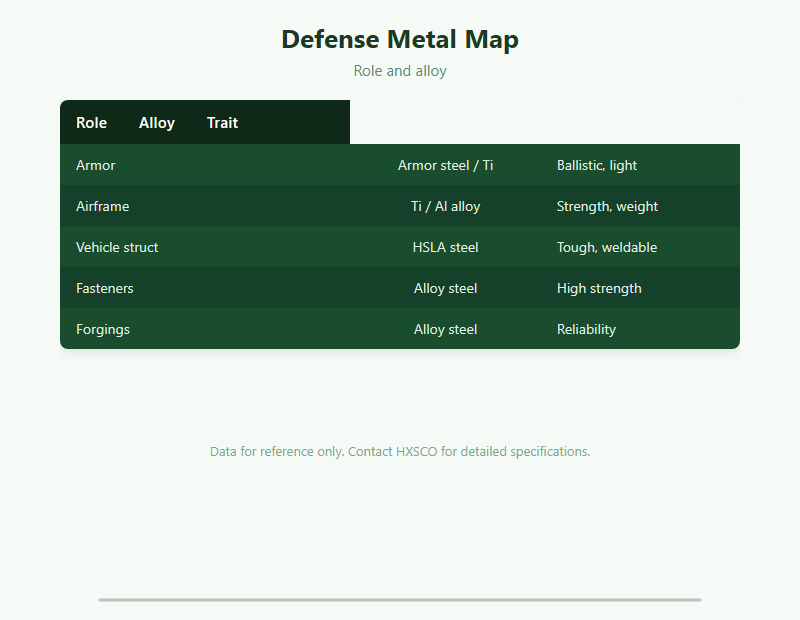
Armor plate and titanium ceramics carriers balance stop power against weight, with the strength basis in our Comparaison des forces and the titanium option in our Titanium Supplier et Titanium Grades Guide, plus the trade study in our Titanium vs Stainless guide.
Airframe, Vehicle and Structure
Airframes lean on titanium and aluminum alloys, vehicles on HSLA steel, and the build methods are in our Forging vs Casting Guide et Machining Guide; the structural view is in our Construction Structural Guide.
Fasteners, Forgings and Reliability
High-strength alloy fasteners and forgings carry fatigue and shock loads, with heat treatment in our Heat Treatment Guide and grades in our Tool Steel Types Guide et Spring Steel Types Guide.
Certification and Supply
Defense metal ships with full pedigree, verified by our Mill Test Certificate Guide et Quality Inspection Guide, welded per our Welding Joining Guide and packed per our Export Packing Guide.
Get a Quote
Tell HXSCO your requirements and we will respond with a competitive quote and lead time.
Questions fréquemment posées
Armor steel plate and titanium-based systems, chosen by threat and weight budget.
High strength-to-weight for airframes and protected components.
Yes for fatigue-critical shafts, links and structural joints.
Full mill pedigree, heat treatment and inspection records.
Yes, high-strength alloys serve vehicles and structures where weight matters.
Supply Defense-Grade Metal with HXSCO
HXSCO supplies armor, titanium, high-strength aluminum and alloy steel for defense programs with the certification and traceability required. Send your specification for a quote.