


Short answer: Anodizing is an electrochemical process that thickens aluminum’s natural oxide layer, creating a durable, corrosion-resistant, and decorative finish. Type II (decorative) builds 5–25 μm; Type III (hard anodize) reaches 25–50+ μm for wear resistance.
At a Glance
How Anodizing Works
The aluminum part acts as the anode in an electrolytic bath (typically sulfuric acid). Electric current drives oxygen ions to bond with the aluminum surface, growing Al₂O₃ (aluminum oxide) outward from the base metal. Unlike plating, the oxide layer is integral — it cannot peel or flake.
The process has three stages: (1) Surface preparation (cleaning, etching, brightening); (2) Anodizing in electrolytic bath; (3) Coloring (if desired) and sealing.
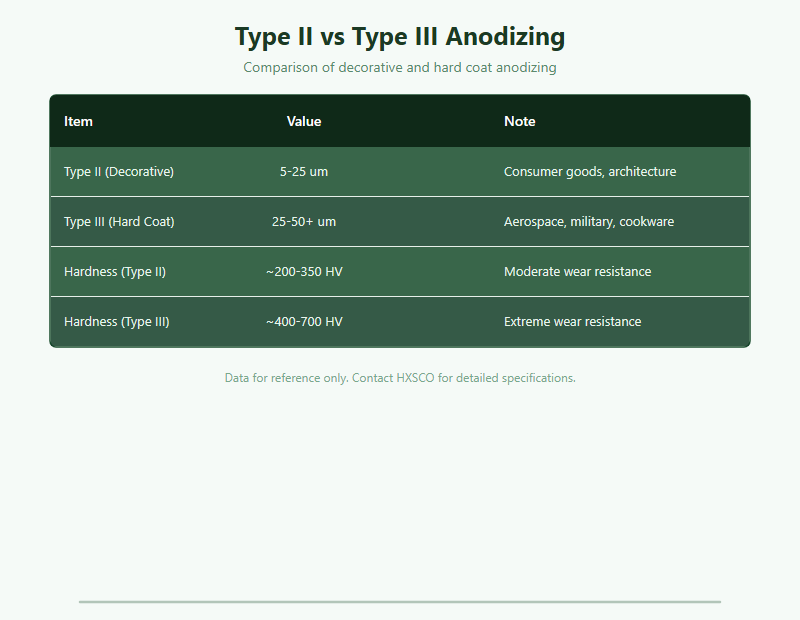
Type II vs Type III Anodizing
| Propriété | Type II (Decorative) | Type III (Hard Coat) |
|---|---|---|
| Épaisseur | 5–25 μm | 25–50+ μm (up to 100 μm) |
| Dureté | ~200–350 HV | ~400–700 HV |
| Color options | Clear, black, bronze, gold, blue, red | Usually dark/olive; dyeable but limited |
| Typical use | Architectural trim, consumer goods, electronics | Aerospace, military, cookware, wear surfaces |
Coloring Methods
Anodized aluminum can be colored through several methods:
- Dye absorption (Class 2): The porous oxide layer absorbs organic dyes before sealing. Wide color palette but limited UV stability outdoors.
- Electrolytic coloring (Class 1): Metal salts (tin, nickel, cobalt) deposited at the pore bottom produce extremely durable metallic colors (bronze, black, champagne). Best for architectural use.
- Interference coloring: Controlled pore structure creates color through light interference. Premium, limited palette.
Benefits of Anodized Aluminum
- Corrosion resistance: Sealed anodic film protects against weather, salt spray, and chemicals — ideal for marine applications.
- Wear resistance: Hard coat (Type III) approaches ceramic hardness for sliding/wear surfaces.
- No peeling/flaking: The oxide grows from the base metal — unlike paint or plating.
- Thermal stability: Withstands temperatures up to ~2000°C melting point of Al₂O₃.
- Eco-friendly: No VOCs, heavy metals, or hazardous byproducts in modern processes.
Appearance retention: Color and finish last decades outdoors with proper sealing.
Applications courantes
Architectural: window frames, curtain walls, handrails, roofing panels. Consumer electronics: laptop housings, phone cases, camera bodies. Automotive: trim, emblems, interior components. Industrial: machined parts, instrument panels, medical equipment. Cookware: hard-anodized pots and pans with non-stick properties.
Get a Quote
Tell HXSCO your requirements and we will respond with a competitive quote and lead time.
Questions fréquemment posées
It depends on the application. Anodizing offers superior UV stability, harder surface, and metallic appearance. Powder coating provides thicker film, wider color choices, and better impact resistance. For outdoor architecture, anodizing often lasts longer.
Welding destroys the anodic layer in the heat-affected zone. Post-weld re-anodizing is possible but may show color mismatch. Design around this by masking critical areas or planning for rework.
Properly sealed architectural anodizing lasts 20–40 years outdoors with minimal maintenance. Indoor applications can last indefinitely. Hard coat in industrial service typically provides 10–20 years depending on abrasion conditions.
Most 5xxx and 6xxx series anodize well. 2xxx series (high copper) can discolor. Cast alloys with high silicon produce gray/dark finishes. Consult your supplier for alloy-specific results.
Yes — the oxide layer grows both outward and inward, with about 50% growth above the original surface. For a 25 μm coating, expect ~12.5 μm dimensional increase per side. Factor this into tolerances.
Need Anodized Aluminum?
HXSCO supplies anodized aluminum sheet, plate, profile, and fabricated parts in clear, black, bronze, gold, and custom colors. Tell us your requirements for a quote.