


Short answer: White iron is cast iron solidified with carbon as hard iron carbide rather than graphite, giving outstanding abrasion resistance but brittleness; chilled and alloyed versions tailor the hard case, as detailed in our Cast Iron Guide.
At a Glance
Why White Iron Is So Hard
Rapid cooling or alloying suppresses graphite and forms cementite carbides; the contrast with graphite irons is in our Cast Iron Guide.
Plain, Chilled and Alloyed White Iron
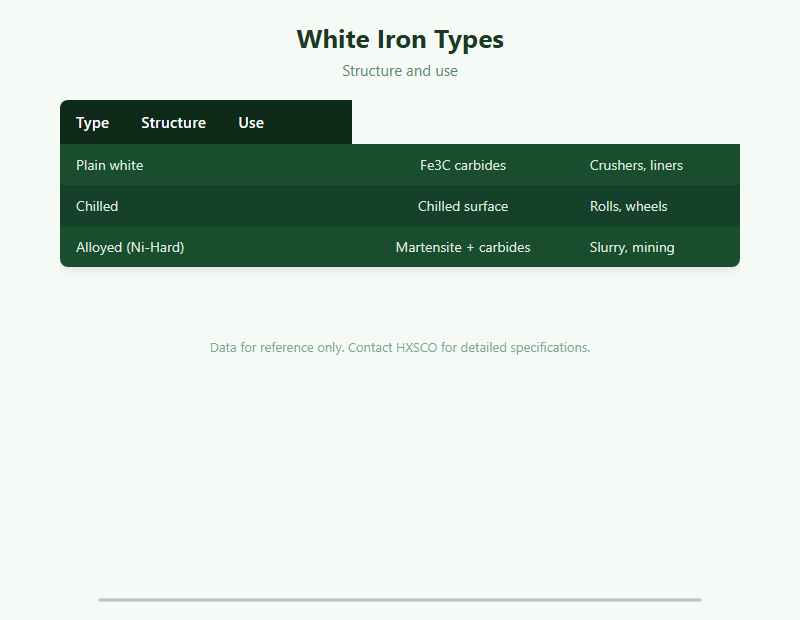
Chilled castings cool a surface layer fast for a hard skin over a tougher core; Ni-Hard and high-chromium irons add alloy carbides for slurry wear; the process basis is in our Metal Casting Guide.
Where Wear Parts Are Used
Crusher liners, pump impellers, mill liners and railway wheels; the duty context is in our Mining Guide and the surface view in our Surface Treatment Guide.
Machining and Joining
White iron is very hard to machine and hard to weld; forming routes are compared in our Cast vs Forged Guide.
Quality and Inspection
Chill depth and hardness are verified per our Quality Inspection Guide; common issues appear in our Casting Defects Guide.
Ordering Notes
Specify iron type, hardness range and part drawing; price with our Price Quotation Guide.
Get a Quote
Tell HXSCO your requirements and we will respond with a competitive quote and lead time.
Sıkça Sorulan Sorular
Its fracture surface is bright, carbide-rich white.
A casting with a fast-cooled hard outer layer.
Only with special tooling; often cast near-net.
High-abrasion wear parts like liners and impellers.
Yes – see our cast iron supplier page.
Get a White Iron Quote
HXSCO supplies plain, chilled and alloyed white iron wear castings with hardness certificates. Send your part drawing for a quote.