


Short answer: TIG welding uses a non-consumable tungsten electrode for precise, clean welds on thin and exotic metals; MIG feeds a consumable wire for fast, high-deposition work on thicker sections — the choice is speed versus finish and control.
At a Glance
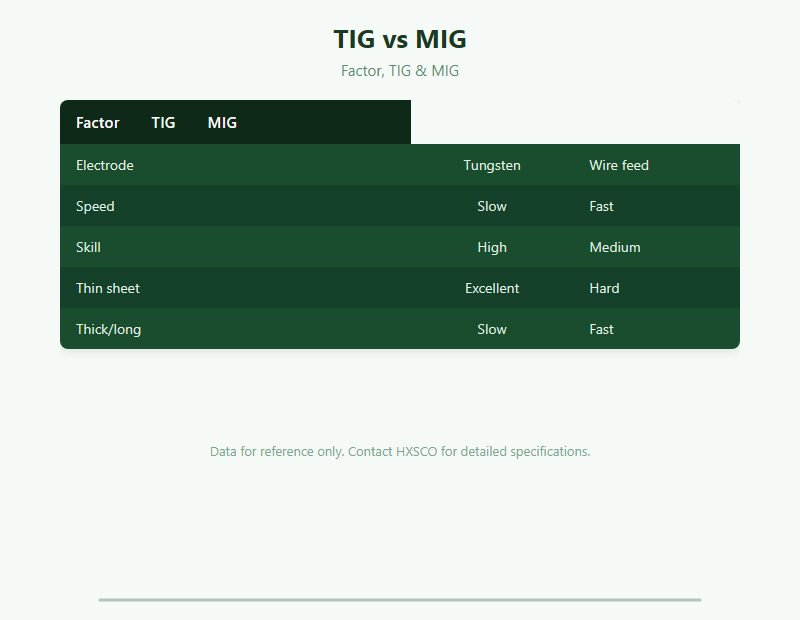
Process Differences
TIG holds a separate filler by hand and shields with argon; MIG pushes wire through the gun. Background in How To Weld Stainless Steel, Alüminyum Nasıl Kaynak Yapılır ve How To Weld Carbon Steel; joint prep in Weld Edge Prep Guide.
Picking the Process
Use TIG for thin sheet, root passes and colour-critical work; use MIG for long seams and thick plate. Avoid mixing metals via Dissimilar Metal Welding Guide and control heat with Metal Heat Affected Zone Guide.
QA & Supply
Check beads and cracks by Weld Defects Guide ve Metal Ndt Guide, limit distortion (Metal Welding Distortion Guide), and document consumables per Welding Consumables Guide ve Mill Test Certificate Guide. HXSCO supplies weld-ready plate and tube.
Get a Quote
Tell HXSCO your requirements and we will respond with a competitive quote and lead time.
Sıkça Sorulan Sorular
TIG uses a fixed tungsten electrode with hand-fed filler; MIG feeds a consumable wire automatically.
TIG — its lower, controllable heat avoids burn-through on thin metal.
MIG — the continuous wire feed gives much higher deposition rates.
Yes — it needs both hands and precise heat control, so it takes more skill.
HXSCO supplies plate, sheet and tube prepared for TIG and MIG welding.
Source Weld-Ready Metal from HXSCO
HXSCO supplies plate, sheet and tube prepared for TIG and MIG welding with certificates. Send your alloy and quantity for a quote.