


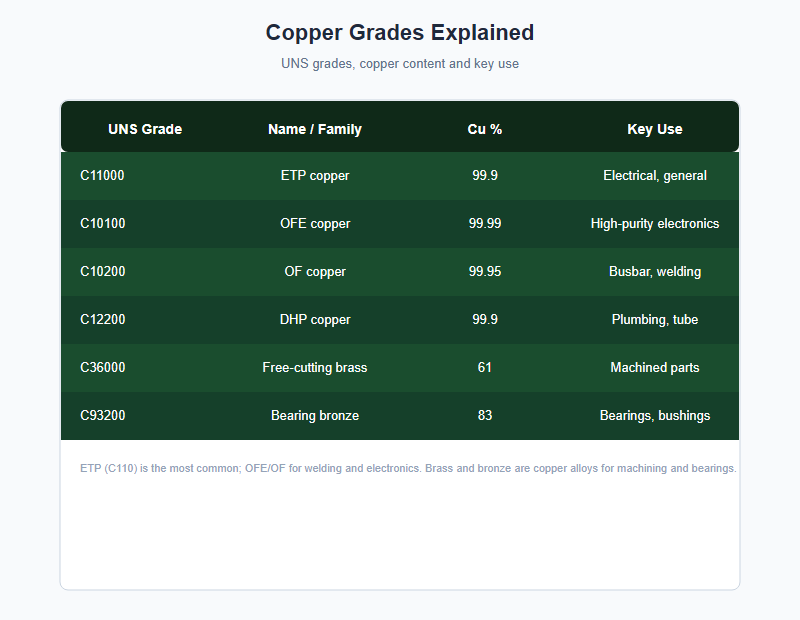
Short answer: Copper grades are identified by UNS numbers. ETP C11000 (99.9% Cu) is the general-purpose electrical grade; oxygen-free C10100 (99.99%) and C10200 suit welding and electronics; DHP C12200 is the plumbing and tube grade. Brass (C36000) and bronze (C93200) are copper alloys for machining and bearings. Match the grade to conductivity, welding, and corrosion needs.
At a Glance
Understanding UNS Copper Grades
Copper and its alloys are catalogued by Unified Numbering System (UNS) codes. The first letter ‘C’ means copper or copper alloy; the numbers identify the specific composition. Picking the right code ensures the conductivity, weldability, and corrosion resistance your part needs.
Pure Copper Grades
The chart above lists the workhorses. C11000 (ETP) is electrolytic tough-pitch copper, the default for electrical and general use. C10100 (OFE) ve C10200 (OF) are oxygen-free grades that resist hydrogen embrittlement, used for welding, brazing, and high-purity electronics. C12200 (DHP) is deoxidized with phosphorus for tube and plumbing.
Copper Alloys: Brass and Bronze
Brass (C36000) is roughly 60% copper with zinc, free-machining for nuts, fittings, and turned parts — see our pirinç çubuk tedarikçileri page. Bronze (C93200) is a copper-tin alloy used for bearings and bushings where wear resistance matters. Alloys trade some conductivity for strength and machinability.
How to Choose a Grade
- Maximum conductivity: C11000, or C10100/C10200 for welded/electronic parts.
- Plumbing & tube: C12200 (DHP).
- Machined parts: brass C36000 or bronze C93200.
- Corrosion service: pick the alloy rated for your media and environment.
Sourcing the Right Grade from HXSCO
HXSCO stocks copper and copper-alloy products in sheet, bar, rod, and wire, and can source the exact UNS grade with mill certificates. Send your grade, form, and quantity and we will quote material, cutting, and export packing.
Sıkça Sorulan Sorular
C11000 is UNS code for electrolytic tough-pitch (ETP) copper, about 99.9% pure, the general-purpose high-conductivity grade.
C11000 is pure ETP copper for electrical use; C12200 is deoxidized high-phosphorus (DHP) copper used for tube and plumbing because it welds and bends cleanly.
Use oxygen-free C10100 or C10200 when the part will be welded, brazed, or used in high-purity electronics, to avoid hydrogen embrittlement.
Both are copper alloys; brass is mainly copper-zinc (easy to machine), bronze is mainly copper-tin (good for bearings and wear resistance).
Match the grade to your need: C11000 for conductivity, C12200 for tube/plumbing, oxygen-free for welding/electronics, and brass/bronze alloys for machined or bearing parts.
Ready to source copper or copper alloys?
Tell us the grade (C11000, C12200, brass, etc.), form, size, quantity, and destination. HXSCO will reply with a competitive quote, lead time, and mill-test options.
Request a QuoteWhy Buyers Source Copper & Copper Alloys from HXSCO
HXSCO supplies copper and copper-alloy long products and fabricated parts to manufacturers, electrical contractors, and trading companies worldwide. We stock ETP (C11000), oxygen-free (C10200), and DHP (C12200) copper plus brass and bronze alloys in sheet, plate, pipe, tube, bar, rod, and wire. Material can be supplied with mill-test certificates, precision cutting, and export packing. Contact HXSCO for a project-specific quote or grade recommendation.