



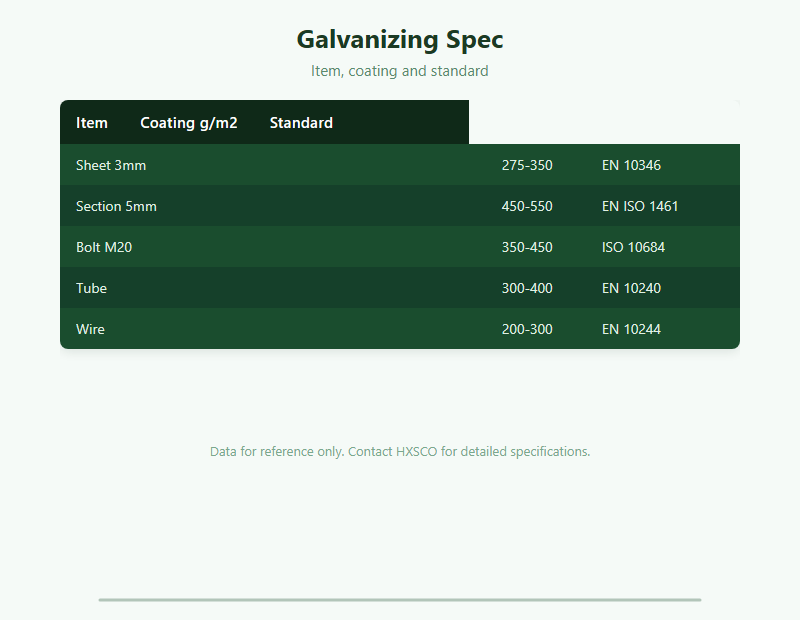
Short answer: Hot-dip galvanizing dips cleaned steel into molten zinc to form a bonded, sacrificial coating that protects for decades; coating thickness follows standards such as EN ISO 1461 and EN 10346 and rises with section thickness, so buyers specify steel grade, coating class and any duplex paint system.
At a Glance
How Galvanizing Works
Clean steel meets molten zinc to form alloy layers, with the steel basis in our Carbon Steel Supplier and the alloy choice in our Galvanized vs Stainless Guide; our Galvanized Steel Sheet Supplier stocks pre-coated sheet.
Coating and Thickness
Thicker sections get thicker coating per EN ISO 1461, with hardness detail in our Hardness Comparison and testing in our Quality Inspection Guide.
Design for Galvanizing
Drain holes and venting avoid trapped acid and steam, with fabrication in our Welding Joining Guide 그리고 Sheet Fabrication Guide; the duplex system is in our Finishing Coating Guide.
Corrosion Life and Sourcing
Zinc sacrifices itself for decades in atmosphere and soil, covered in our Corrosion Protection Guide; buyers confirm class and cert via our Mill Test Certificate Guide and pack per our Export Packing Guide.
Get a Quote
Tell HXSCO your requirements and we will respond with a competitive quote and lead time.
자주 묻는 질문
Dipping cleaned steel in molten zinc to form a bonded corrosion coating.
Decades in atmosphere and soil, longer with a duplex paint system.
EN ISO 1461 for items, EN 10346 for continuous sheet.
Yes – coating thickness rises with steel section thickness.
Yes, but vent fumes and clean the weld; touch up damaged spots.
Source Galvanized Steel with HXSCO
HXSCO supplies galvanized sheet, sections, tube and fabricated structurals to EN ISO 1461 and EN 10346. Send grade, coating class and quantity for a quote.